Free Alternatives to Appeal for Editorial

8 alternatives | 8 highly relevant | serif | Best match: EB Garamond (80%)

Looking for a free serif font for editorial projects? Appeal by WeType is a popular choice, but its licensing cost can be prohibitive. We've curated 8 free alternatives that work well in editorial contexts. We've identified 8 that are especially well-suited for this context. Each alternative is scored by visual similarity and contextual relevance, and ships under an open-source license for both personal and commercial use.

Top Picks

Comparison Table

Font Relevance Similarity Weights Variable License Source
EB Garamond 64 80% Variable Yes OFL-1.1 Google Fonts ↗
Crimson Pro 64 78% Variable Yes OFL-1.1 Google Fonts ↗
Alegreya 63 71% Variable Yes OFL-1.1 Google Fonts ↗
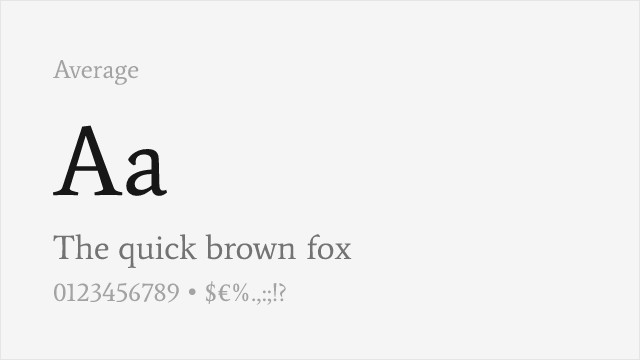
Average 55 68% 1 No OFL-1.1 Google Fonts ↗
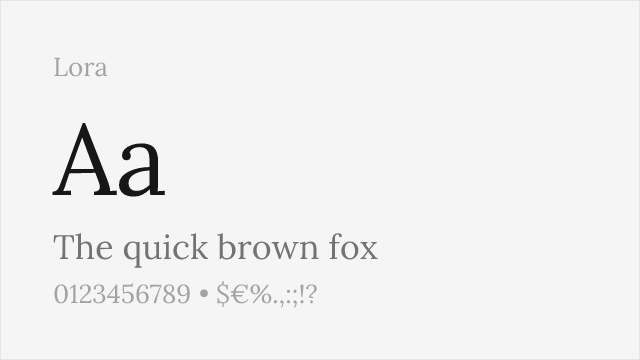
Lora 44 77% Variable Yes OFL-1.1 Google Fonts ↗
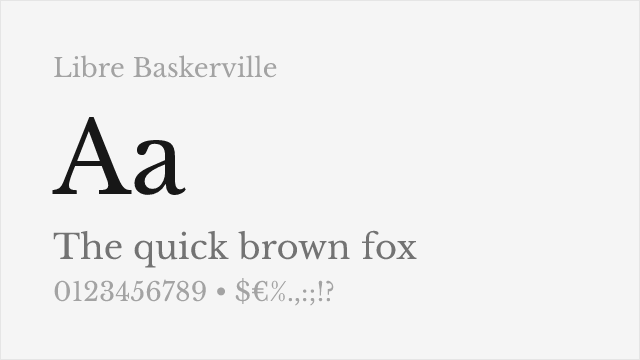
Libre Baskerville 43 74% 2 No OFL-1.1 Google Fonts ↗
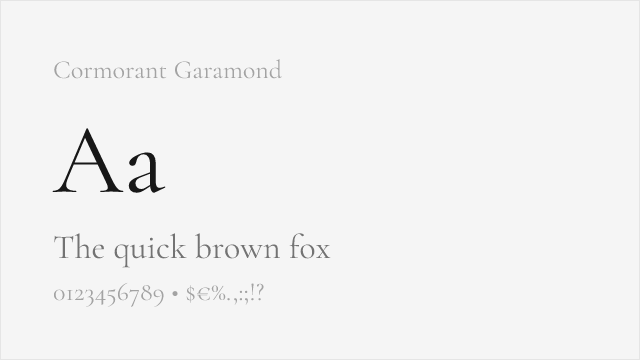
Cormorant Garamond 43 72% 5 No OFL-1.1 Google Fonts ↗
Source Serif Pro 36 75% Variable Yes OFL-1.1 Google Fonts ↗

All Alternatives (8)

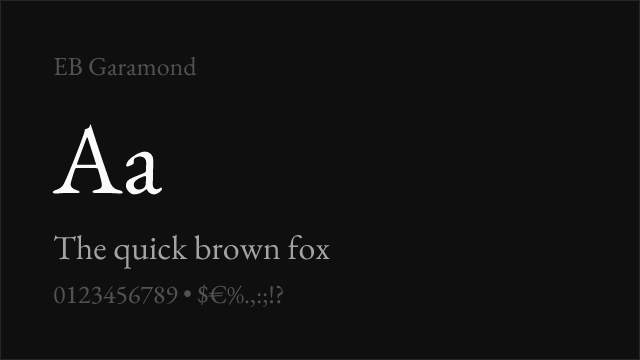
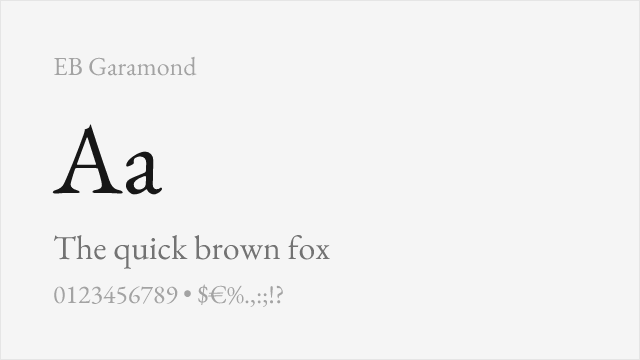
#1 EB Garamond 80%
[Google Fonts] · OFL-1.1 · Variable

Scholarly revival of Claude Garamont's originals with meticulous historical accuracy
Why it matches: EB Garamond shares Appeal's revival spirit and commitment to historical typographic models. Both typefaces translate pre-digital type traditions into contemporary digital forms while preserving the warmth and organic character of their sources. EB Garamond's Renaissance proportions produce similar reading warmth to Appeal's humanist foundation. At text sizes, both create inviting, comfortable text blocks with classical authority.
scholarly and literary publishingcultural institution communicationsclassical editorial designluxury print materials
Get Font ↗
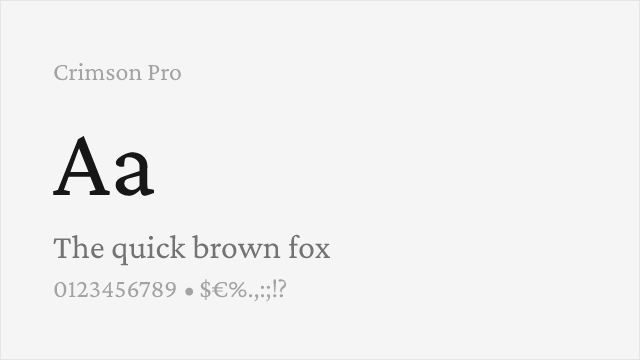
#2 Crimson Pro 78%
[Google Fonts] · OFL-1.1 · Variable

Renaissance-inspired text serif with variable weight and comprehensive features
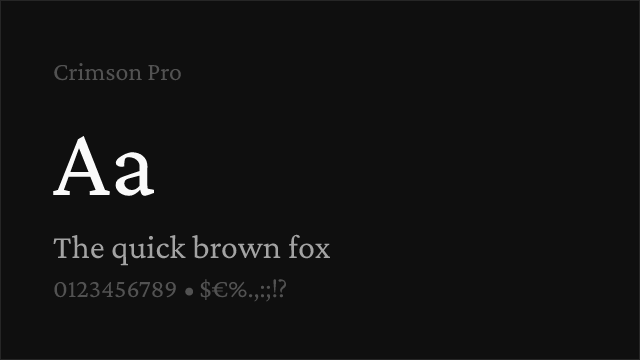
Why it matches: Crimson Pro shares Appeal's warm, inviting serif character designed for sustained reading. Both typefaces balance classical proportions with contemporary functionality. Crimson Pro's variable weight axis and extensive OpenType features provide editorial flexibility comparable to Appeal's professional feature set. The slightly higher contrast and old-style proportions create text blocks with similar warmth and rhythm.
book and journal publishingeditorial websitesliterary magazineslong-form digital reading
Get Font ↗
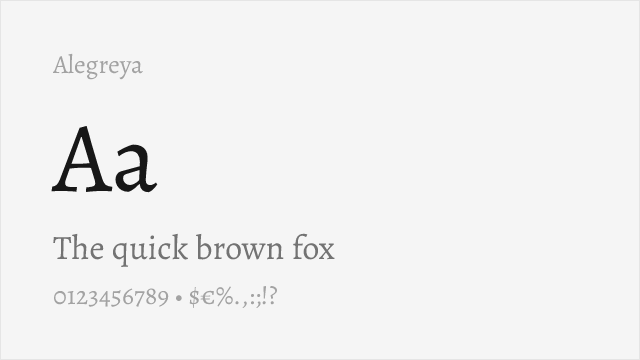
#3 Alegreya 71%
[Google Fonts] · OFL-1.1 · Variable

Calligraphic serif family with small caps, variable support, and dynamic character
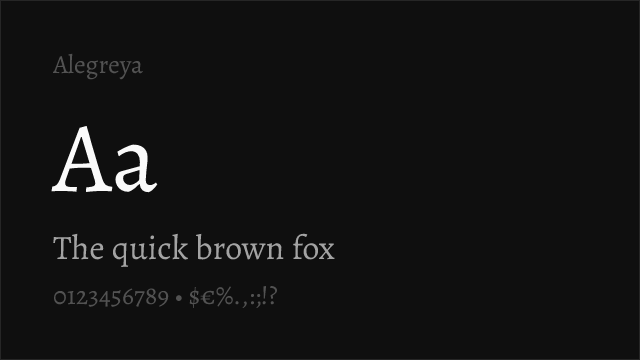
Why it matches: Alegreya shares Appeal's vision of a warm, culturally-grounded text serif. Both were designed with attention to the cultural dimensions of typography, not just its functional aspects. Alegreya's roots in Argentine typographic tradition provide a parallel to Appeal's cross-cultural foundations. The calligraphic energy and reading warmth are comparable, though expressed through different design vocabularies.
culturally-minded publishingliterary and artistic institutionseditorial with personalitymultilingual text composition
Get Font ↗
#4 Average 68%
[Google Fonts] · OFL-1.1 · 1 weights

Measured text serif design synthesizing classical serif traditions
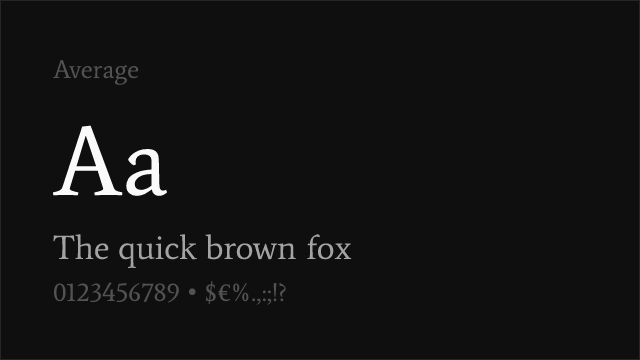
Why it matches: Average shares Appeal's approach of drawing from multiple serif traditions rather than reviving a single historical model. Both produce balanced, readable text blocks suitable for extended reading. Average's single weight limits its range compared to Appeal, but its synthesized proportions offer similar reading comfort at body sizes.
body textacademic publishingweb typographyeditorial design
Get Font ↗
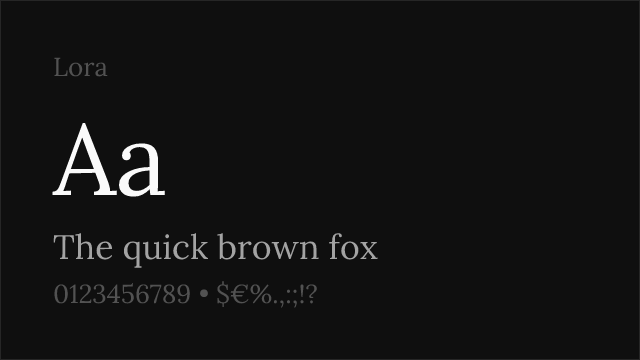
#5 Lora 77%
[Google Fonts] · OFL-1.1 · Variable

Calligraphy-influenced serif with variable support and warm reading character
Why it matches: Lora captures Appeal's warm, inviting reading character through calligraphic influences that echo Appeal's humanist foundations. Both typefaces produce text blocks that feel welcoming and comfortable for extended reading. Lora's slightly more visible calligraphic personality gives it a touch more warmth than Appeal's more restrained revival approach, but the overall reading experience is comparable.
literary websites and blogswarm editorial designlifestyle brand communicationscomfortable reading experiences
Get Font ↗
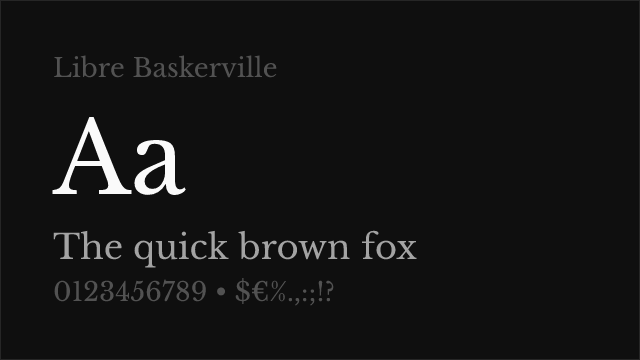
[Google Fonts] · OFL-1.1 · 2 weights

Optimized for body text on screen with traditional transitional proportions
Why it matches: Libre Baskerville shares Appeal's focus on body text readability with traditional proportions. Both typefaces are designed for the specific challenge of making serif text comfortable to read at body sizes. Libre Baskerville's Baskerville-derived framework produces a slightly more formal tone than Appeal's warmer revival character, but the reading experience at text sizes is comparable.
web body textinstitutional communicationsblog and article typographytraditional editorial design
Get Font ↗
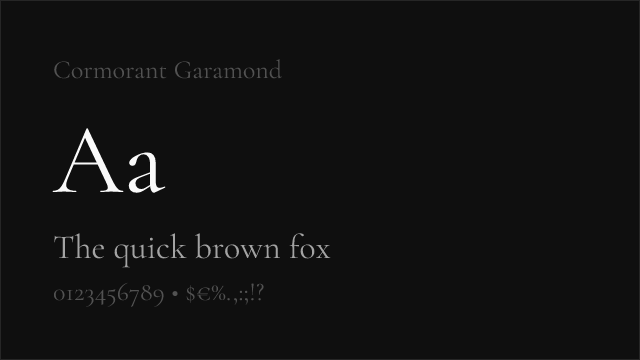
[Google Fonts] · OFL-1.1 · 5 weights

High-contrast display Garamond with dramatic presence and variable support
Why it matches: Cormorant Garamond channels the same humanist tradition that informs Appeal but pushes contrast and refinement toward display use. Both typefaces draw on historical models with contemporary execution. While Appeal prioritizes text-size reading comfort, Cormorant excels at display sizes where its dramatic contrast and refined details create visual impact. Together they represent different applications of the revival serif tradition.
display and headline typographyluxury brand communicationscultural event materialsfashion editorial
Get Font ↗
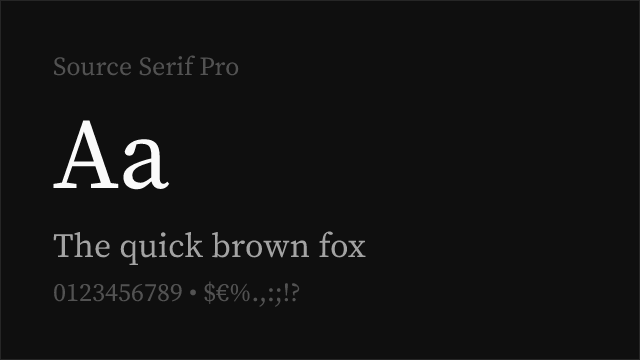
[Google Fonts] · OFL-1.1 · Variable

Adobe's transitional serif with optical sizing and reliable cross-platform rendering

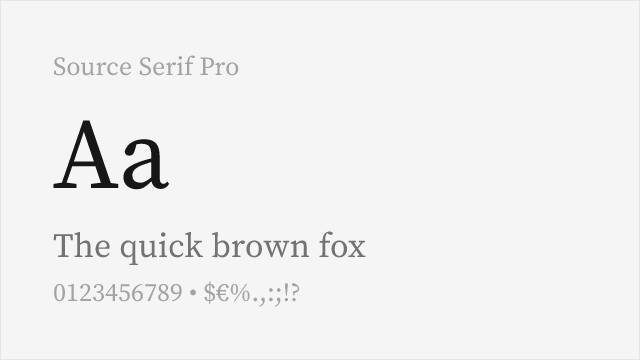
Why it matches: Source Serif Pro matches Appeal's reliability as a text workhorse, though from a transitional rather than revival tradition. Both prioritize consistent text color and reading comfort across extended passages. Source Serif Pro's optical sizing provides size-specific optimization, and Adobe's hinting ensures reliable rendering across platforms. The overall tone is more rational and less warm than Appeal but comparably authoritative.
cross-platform publishingcorporate documents and reportstechnical documentationweb body text
Get Font ↗

Related Pages