Install FontSwap
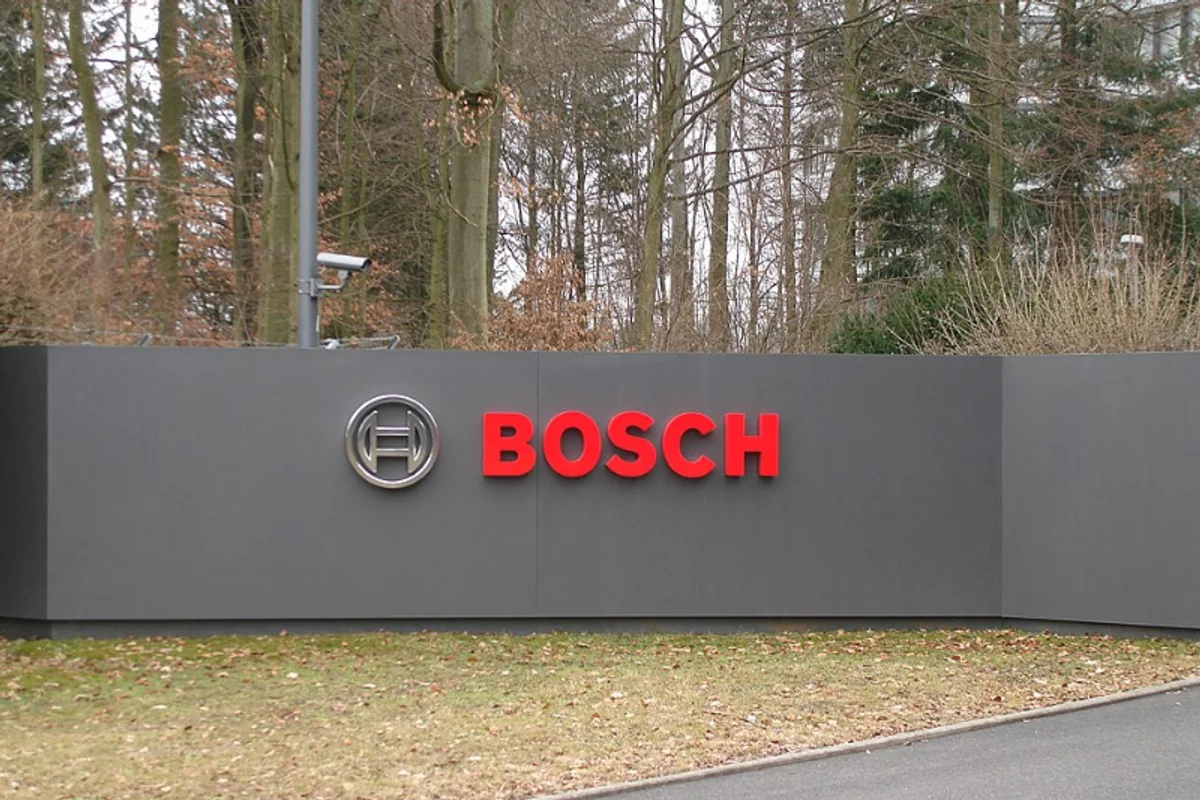
Bosch Uses DIN
DIN is not just a typeface. It is a standard — literally. Developed by the Deutsches Institut fur Normung (German Institute for Standardization), DIN began as the lettering system for German road signs, technical drawings, and government documents. It was designed to be read without ambiguity.
Bosch adopted DIN for corporate communications and product labeling around 1990, and the logic was almost too obvious. A German engineering company, founded in 1886, building power tools, automotive components, and industrial systems — choosing a typeface that originated from the same national standardization body that certifies its products.
The fit is not decorative. It is structural. DIN says: this company measures things, builds things, and takes both seriously.
Why DIN Works for Bosch
Standardization as brand value
DIN was born from the need to eliminate ambiguity in technical communication. Every letterform is constructed on a strict grid with consistent stroke widths. For a company whose products must meet DIN and ISO standards, the typeface is an extension of the manufacturing philosophy:
- Uniform stroke weight signals consistency and reliability
- Open apertures ensure legibility on product labels and safety markings
- Grid-based construction reflects engineered precision
International legibility
Bosch operates in over 60 countries. DIN's straightforward geometry translates across languages and scripts without losing its industrial character. There is no calligraphic nuance to misread, no stylistic flourish to misinterpret.
Heritage without nostalgia
DIN connects Bosch to its German engineering roots without looking backward. The typeface has been updated and expanded over decades, mirroring Bosch's own evolution from a Stuttgart workshop into a global technology company.
Free Alternative: Exo
Exo in SemiBold (600) captures DIN's industrial geometry while adding a subtle contemporary edge. Its slightly rounded terminals and uniform stroke weight reproduce the engineered feel of DIN across corporate materials. For product interfaces and technical documentation, Exo delivers the same functional clarity that makes DIN a natural fit for engineering brands.