Install FontSwap
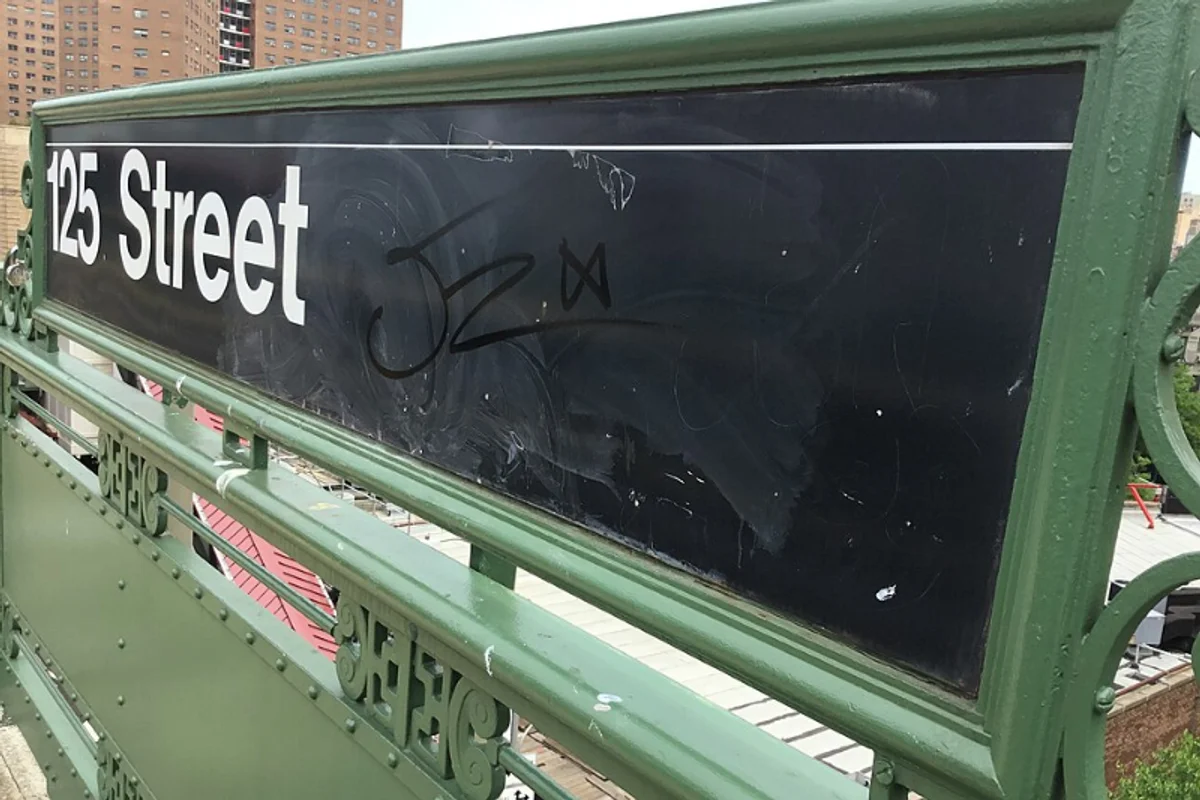
NYC Subway Uses Helvetica
The popular story goes like this: Massimo Vignelli designed the New York City subway signage in Helvetica in 1970, and it has been that way ever since.
The actual story is messier, more interesting, and reveals something about how design systems survive in the real world.
Vignelli and Bob Noorda's 1970 Graphics Standards Manual actually specified Standard Medium — a variant of Akzidenz-Grotesk — partly because the sign shop already had the plates and importing Helvetica from Switzerland was expensive. Helvetica entered the system gradually through the 1970s and 1980s as signs were replaced piecemeal. It became the official standard in December 1989, nearly two decades after the manual was written.
Today, Helvetica Medium in white on black backgrounds guides 5.5 million daily riders through 472 stations. The colored route circles (A/C/E in blue, 1/2/3 in red) are set in Helvetica Bold. It is the largest single deployment of the typeface in public infrastructure.
Why Helvetica Medium Works for the Subway
Transit signage is not branding — it is survival information. When you're underground, in a hurry, possibly lost, and surrounded by noise, the sign needs to deliver its message without friction.
Helvetica Medium's contribution is what it doesn't do: it doesn't call attention to itself, doesn't require decoding, doesn't add cognitive load.
The weight is everything
- Light would vanish at distance
- Bold would blur at small sizes under fluorescent lighting
- Medium occupies the exact optical sweet spot for white-on-black type in a transit environment
Enough stroke width to glow against the dark background. Enough interior space in the counters to maintain letter discrimination at speed.
The Vignelli map paradox
Vignelli's famous 1972 subway map — the beautiful, diagrammatic one that the MTA replaced in 1979 because riders couldn't use it for actual navigation — did use Helvetica. Ironically, it was the map that cemented the Helvetica-subway association in design culture, even though the map was retired long before Helvetica became the official sign typeface.
Why it scales
The system's durability comes from its simplicity:
- Station names in Helvetica Medium
- Route indicators in Helvetica Bold on colored circles
- Directional information in Helvetica with arrow glyphs
Three typographic elements, one typeface, infinite stations. The system scales because it never tries to be interesting.
Free Alternative: Inter
Inter Medium (500) on black backgrounds closely replicates the MTA's Helvetica Medium treatment. Inter's larger x-height and wider apertures actually improve legibility at the small sizes where mobile transit apps live. Set white on black with letter-spacing: 0.01em for the authentic subway-sign feel. Roboto Medium is another viable option for physical signage at architectural scale.