Free Alternatives to Apercu

About Apercu
- Foundry
- Colophon Foundry
- Classification
- sans-serif
- Style
- neo-grotesque
Brands Using Apercu
Primary typeface for the arts centre's visual identity and wayfinding
Agency branding and internal communications
Brand identity and editorial design for the music and arts platform
Primary brand typeface across packaging and website
 See Apercu live on these sites with FontSwap →
Apercu is a neo-grotesque sans-serif typeface designed by Anthony Sheret and Edd Harrington, released by their London-based Colophon Foundry in 2010. The name — French for "a glimpse" or "summary" — is fitting for a typeface that offers a compressed, hybridized view of grotesque history. Apercu does not attempt to be another Helvetica descendant or another geometric sans. Instead, it openly acknowledges four distinct typographic ancestors — Helvetica, Franklin Gothic, Futura, and Johnston — and synthesizes them into something that belongs to none of those lineages while carrying traces of all of them. The result is a typeface with a distinctive personality: slightly awkward in its proportions, unexpectedly charming in its letterforms, and immediately recognizable to anyone who pays attention to typography.
Apercu requires a paid license from Colophon Foundry. The foundry offers desktop, web, and app licenses, with pricing that reflects its position as an established independent type foundry. There is no free tier or trial weight. The family includes Apercu Regular, Apercu Mono (a monospaced companion), and more recently Apercu Neue (an expanded family with additional weights and widths). If your project cannot accommodate Colophon's licensing structure, this page covers the best open-source alternatives and what to evaluate honestly when choosing one — because Apercu's quirkiness is genuinely hard to replicate.
Why Apercu Matters
Apercu's significance in contemporary type design extends far beyond its letterforms. It is the typeface that proved independent foundries could compete with the majors — not by imitating them, but by offering something they could not. When Sheret and Harrington released Apercu in 2010, the landscape of commercial type design was still dominated by a handful of large foundries. Independent type designers existed, but their work was largely confined to display faces, experimental projects, and niche applications. The idea that a two-person London foundry could release a text-grade sans-serif that would be adopted by major cultural institutions and creative agencies worldwide was genuinely novel.
Apercu changed that calculus. Within a few years of its release, it had become one of the most widely used typefaces in creative branding and cultural identity work. The Barbican Centre, one of London's most important arts venues, adopted it as a core element of its visual identity. Creative agencies like Wolff Olins used it in their own branding. The beauty brand Glossier made Apercu central to its visual identity, deploying it across packaging and its website. Design publications, architecture firms, galleries, and independent studios across Europe and North America adopted Apercu as shorthand for a specific kind of creative seriousness — the typographic equivalent of demonstrating that you understand design history well enough to make an unexpected but informed choice.
What made Apercu's success particularly important for the industry was that it opened the door for the wave of independent foundry typefaces that followed. Colophon's success demonstrated a viable business model: a small foundry with a strong conceptual point of view could build a sustainable practice around typefaces that served both functional and cultural purposes. The subsequent emergence of foundries like Dinamo, Grilli Type, Klim, and the commercial growth of studios like Commercial Type was enabled in part by the market that Apercu helped create. Before Apercu, independent type design was often perceived as artisanal but commercially marginal. After Apercu, it was recognized as a legitimate alternative to the established foundries — and in many creative contexts, a preferred one.
The timing was also significant. Apercu arrived at the beginning of the 2010s, a decade that would see an explosion of interest in typography among graphic designers, web developers, and the broader creative class. As responsive web design matured and web font technology improved, designers gained unprecedented control over typography on screen. Apercu was perfectly positioned for this moment: distinctive enough to reward deliberate selection, functional enough for body text on screens, and culturally loaded enough to communicate taste and awareness to the design-literate audiences that increasingly populated the web.
Apercu also pioneered what might be called the "designer's grotesque" — a neo-grotesque that rejects the Helvetica model of invisible neutrality in favor of visible personality. Where Helvetica asks to be unseen, Apercu asks to be noticed. Not loudly, not disruptively, but enough to register as a conscious choice. This positioning created an entirely new market category that would eventually include typefaces like Favorit, Basis Grotesque, ABC Diatype, and Neue Montreal — all of which owe something to the space that Apercu carved out. If the first generation of indie foundry hits had a founding member, Apercu is that typeface.
Design Characteristics
Apercu's design intelligence lies in its hybrid construction — the deliberate blending of four distinct typographic traditions into a coherent whole that transcends its sources. Every characteristic can be traced to one or more of its acknowledged influences, but the synthesis produces something none of those sources contain individually:
- The double-storey g: This is Apercu's most immediately recognizable letterform. The lowercase g features a distinctive double-storey construction with a characteristically small, closed lower bowl that gives the letter a slightly compressed, almost bashful appearance. It is one of the first things typographically aware viewers notice, and it instantly distinguishes Apercu from the single-storey g found in most contemporary neo-grotesques. This detail traces back to the Johnston and Franklin Gothic influences in its DNA
- Slightly awkward proportions: Apercu's letters do not follow the perfectly rationalized width relationships of Swiss grotesques. Certain characters are slightly wider or narrower than convention predicts, creating a reading rhythm that feels natural but unfamiliar — as though the typeface was drawn by someone who understood the rules of grotesque design but was not entirely bound by them. This controlled awkwardness is central to its personality and is the hardest quality to replicate in a free alternative
- Hybrid stroke construction: The stroke weight is mostly monoline in the grotesque tradition, but with subtle variations that reflect the influence of Futura's geometric precision and Franklin Gothic's American warmth. The result is neither purely geometric nor purely grotesque — it sits in a transitional space that gives it visual interest without sacrificing functionality
- Moderate x-height with generous counters: The x-height is comfortable rather than extreme, placing Apercu in the editorial middle ground between the tall x-heights of screen-optimized fonts and the classical proportions of book typefaces. Open counters in letters like a, e, and s ensure readability at text sizes while the overall proportions maintain an editorial rather than utilitarian character
- Distinctive a form: The lowercase a features a construction that draws from the geometric tradition rather than the standard grotesque model, with a slightly unconventional bowl shape that contributes to the typeface's quirky charm. Alongside the double-storey g, it is one of the characters that most strongly signals "this is Apercu" to informed viewers
- Johnston-influenced geometry: The influence of Edward Johnston's iconic London Underground typeface is visible in Apercu's treatment of circular forms and in the overall sense of geometric clarity tempered by humanist warmth. This specifically British design heritage distinguishes Apercu from the Swiss and American grotesque traditions that dominate the category
- Flat-sided curves with gentle flattening: The bowls and counters feature the subtle vertical flattening common to contemporary neo-grotesques, but with enough curvature retained to avoid the rigid, mechanical quality of purely geometric construction. This treatment contributes to Apercu's ability to feel both modern and slightly organic
The family architecture includes the core Apercu family (Light, Regular, Medium, Bold, and Black with matching italics), Apercu Mono (a monospaced companion that shares the personality of the proportional family), and the more recent Apercu Neue (an expanded version with additional weights, widths, and refined spacing for contemporary digital applications). No variable font version is available across any of these families.
Where Apercu Excels
Apercu performs at its highest level in contexts where creative credibility and typographic distinctiveness matter as much as functional readability:
- Cultural institution branding: Museums, galleries, arts centres, and cultural organizations find in Apercu a typeface that communicates contemporary relevance without the exhausted neutrality of Helvetica or the decorative noise of display faces. The Barbican Centre's adoption established this use case, and it has become a default consideration for arts venues seeking a modern but intellectually credible typographic identity
- Creative agency identity: Design studios, branding agencies, and creative consultancies use Apercu to signal that they treat typography as a design decision rather than an afterthought. It communicates design literacy and cultural awareness without the preciousness of more explicitly experimental typefaces
- Independent publishing and editorial: Magazines, design blogs, and online publications in the creative space use Apercu for its ability to handle both display and body text with personality. It reads as intentional and design-conscious at headline sizes while maintaining warmth and readability in paragraphs
- Startup branding in creative sectors: Technology companies, design tools, creative platforms, and cultural-adjacent startups choose Apercu to position themselves within the design community. Its early adoption by design-forward consumer brands set the template for startups signaling that they treat visual identity as a core value rather than an afterthought
- Architecture and spatial design: The typeface's slightly geometric character and its London heritage resonate with architecture firms and interior design studios that want their typography to complement rather than compete with spatial thinking
- Packaging and product design: The distinctive letterforms translate well to packaging, labels, and physical products where the typeface needs to be immediately recognizable at small sizes and on varied substrates
- Monospaced needs via Apercu Mono: The availability of a matching monospace variant makes Apercu particularly versatile for projects that span editorial, branding, and technical contexts — developer tools, code-adjacent products, and mixed-content publications
Where Apercu Struggles
Apercu's distinctive personality creates equally distinctive limitations:
- Corporate and enterprise contexts: Apercu's quirkiness reads as informal or insufficiently serious in environments where typography is expected to be invisible. Financial institutions, law firms, large corporations, and government agencies will find it too characterful for their communication standards
- Long-form reading at small sizes: At body sizes in continuous prose (documentation, articles, academic papers), the slightly awkward proportions and distinctive letterforms can create subtle friction that accumulates over extended reading. For sustained reading experiences, Inter or Source Sans 3 offer more ergonomic performance
- Mass-market consumer products: The typeface's appeal to design-literate audiences becomes a liability when the audience is broad and typographically unaware. The quirks that delight designers may register as "something looks slightly off" to general consumers who cannot articulate why
- Data-heavy interfaces and dashboards: Without tabular figures in the standard family (Apercu Mono and Apercu Neue address this partially) and with the slightly irregular proportional relationships, the core Apercu family is not ideal for financial displays, data visualization, or interfaces where numeric alignment matters
- Projects requiring broad language support: Apercu covers Latin and Latin Extended character sets. Projects requiring Cyrillic, Greek, Arabic, or CJK scripts need a fallback strategy, and finding a fallback that matches Apercu's personality is exceptionally difficult — most broad-coverage sans-serifs are too neutral to blend convincingly
- Variable font workflows: The absence of a variable font across the entire Apercu family system means static font files for each weight, impacting web performance budgets for projects loading multiple weights. This is an area where every major free alternative outperforms the premium original
- Warm or playful brands: Apercu's personality skews intellectual and slightly detached. Brands targeting children, families, or casual audiences that need to project warmth and approachability will find it too cerebral — a geometric sans like Nunito or a humanist like Rubik is a better fit for friendly consumer products
How to Choose a Free Substitute
Here is the honest assessment: Apercu's personality is genuinely hard to replicate with free alternatives. Its value comes from the specific hybridization of four typographic traditions into letterforms that feel simultaneously familiar and strange — slightly awkward proportions, a distinctive double-storey g, an unconventional a, and an overall rhythm that no single design lineage produces on its own. Free alternatives can match parts of the equation — the grotesque structure, the editorial readability, the contemporary positioning — but the specific quality of "hybrid grotesque with visible personality" is Apercu's signature and the hardest thing to approximate.
With that caveat established, here is how to evaluate substitutes:
- Personality at display sizes: Set your candidate font at 48px and 72px alongside Apercu specimens. Does it carry any character at all, or does it flatten into generic grotesque neutrality? Look specifically at the lowercase g and a — these are Apercu's most distinctive characters. Space Grotesk retains some personality at large sizes; Inter and DM Sans do not. No free font replicates Apercu's double-storey g in a grotesque context with the same charm
- Reading texture at text sizes: Set a full paragraph at 16px and compare the overall typographic color. Apercu produces a slightly warm, subtly irregular texture that feels alive and hand-curated. Most free grotesques produce a perfectly even texture that feels engineered. Work Sans comes closest to Apercu's editorial warmth at body sizes through its American gothic heritage
- The hybrid quality: This is the hardest criterion to evaluate because it is the most subjective. Apercu feels like it belongs to multiple typographic traditions simultaneously — not fully Swiss, not fully American, not fully geometric, not fully grotesque. Does your substitute carry any sense of mixed heritage, or does it belong clearly to a single lineage? Space Grotesk has its own kind of hybrid character (monospace origins filtered through proportional grotesque convention); Inter is purely a screen-optimized neo-grotesque
- Cultural signaling: Apercu tells a design-literate audience that the person who chose it knows about independent type foundries, cares about typographic personality, and has decided that Helvetica or Inter would be the wrong kind of safe. Does your substitute communicate anything beyond "this project uses a font"? Space Grotesk signals design awareness; Work Sans signals editorial credibility; Public Sans signals institutional neutrality
- Variable font availability: Every free alternative listed here offers variable font support, which Apercu lacks. This is a genuine practical advantage — for web performance, responsive design, and animation. If your project loads multiple weights, the file-size savings of a variable font represent a measurable improvement over Apercu's static font files
The most honest advice: if Apercu was chosen for its personality and cultural positioning, accept that no free font fully replicates that experience and choose based on which aspect of its character matters most for your specific project. If it was chosen primarily for its readability, Inter is the straightforward answer.
Premium Font Neighbors
If Apercu's approach resonates but you want to explore adjacent premium options:
Cluster A: Quirky designer's grotesques (Apercu's direct competitors)
- Basis Grotesque (Colophon Foundry) — Apercu's foundry sibling with a quieter, more humanist approach to the same "designer's grotesque" territory. Where Apercu puts its quirkiness on display through distinctive letterforms, Basis Grotesque achieves its character through subtler proportional choices and a more restrained overall personality
- Favorit (Dinamo) — The Basel counterpart to Apercu's London sensibility; shares the commitment to grotesque convention disrupted by idiosyncratic details, but through different means — Favorit's strangeness lives in its terminals and rhythm where Apercu's lives in its hybrid proportions and specific letterform choices
- ABC Diatype (Dinamo) — Similarly contemporary and design-conscious, with wider proportions and a more systematic construction; shares Apercu's appeal to cultural institutions but through clinical precision rather than quirky charm
- Neue Montreal (Pangram Pangram) — Overlaps with Apercu's creative-studio audience through a raw, slightly imperfect neo-grotesque aesthetic; less quirky but more immediately approachable, with broader weight availability
Cluster B: Polished contemporary grotesques (refined siblings)
- Ginto (Dinamo) — A broader, more commanding grotesque that shares Apercu's cultural positioning but with more geometric, display-forward personality and wider proportions
- Atlas Grotesk (Commercial Type) — Occupies similar cultural territory with more explicit historical grotesque references; wider and more robust, trading Apercu's quirkiness for authoritative clarity
- Duplicata (Commercial Type) — A contemporary grotesque that balances personality with functionality in the same space Apercu operates, but with different formal strategies and a broader range of typographic expression
- Maison Neue (Milieu Grotesque) — Shares Apercu's clean grotesque foundations with a more geometric, Swiss-influenced execution; less personality per letterform but more consistency across the complete family
FAQ
Is Apercu free?
No. Apercu is a premium typeface from Colophon Foundry requiring paid licenses for desktop, web, and app usage. There is no free trial weight, and Apercu is not available through Google Fonts, Adobe Fonts, or any font subscription service. The best free alternative is Inter at 82% similarity, though the personality gap between Inter and Apercu is significant — Inter replicates the function but not the character.
What is the best free alternative to Apercu?
Inter is the closest functional match at 82% similarity, sharing Apercu's grotesque construction and screen readability while adding variable font support and broader language coverage. However, if Apercu's quirky personality is what drew you to it, Space Grotesk at 76% similarity better captures the unconventional, design-conscious character. The honest answer is that no free font replicates Apercu's specific hybrid quality — the choice depends on whether you are trying to match the structure or the spirit.
What does the name Apercu mean?
Apercu (or Aperçu) is a French word meaning "a glimpse," "a summary," or "an insight" — a brief but perceptive observation. The name reflects the typeface's design philosophy: it offers a condensed, hybridized glimpse of four typographic traditions (Helvetica, Franklin Gothic, Futura, and Johnston) synthesized into a single coherent design. The name also suits the typeface's role in branding — Apercu provides a quick visual impression of creative sophistication and typographic awareness.
What is the difference between Apercu, Apercu Mono, and Apercu Neue?
Apercu is the original proportional sans-serif family (Light through Black with italics). Apercu Mono is a monospaced companion that preserves the personality and quirky character of the proportional family while providing fixed-width spacing for code, tabular data, and technical contexts. Apercu Neue is the most recent addition — an expanded version of the proportional family with additional weights, revised spacing optimized for contemporary digital applications, and refinements to individual letterforms. Each is licensed separately, and most projects use the original Apercu as their primary typeface.
Why do cultural institutions and creative agencies use Apercu?
Apercu communicates creative sophistication and typographic literacy without the sterility of pure Swiss neutrality or the exhibitionism of display typefaces. For institutions like the Barbican Centre, which need to project both intellectual seriousness and contemporary relevance, Apercu's hybrid personality signals exactly the right balance. It tells a design-literate audience that the institution's visual identity was crafted with the same care as its programming. For creative agencies, choosing Apercu over safer defaults like Helvetica or Inter is itself a statement about design values — it says the agency understands type history well enough to make an unexpected but informed choice.
Is Apercu a variable font?
No. Neither Apercu, Apercu Mono, nor Apercu Neue are available as variable fonts. All ship as static font files with individual files for each weight and style. This means loading separate files for each weight used on the web, which impacts page performance compared to variable font alternatives. Every free alternative listed on this page offers variable font support, which is a genuine practical advantage for web projects. If web performance is a priority and your project loads three or more Apercu weights, switching to a variable font alternative like Inter could meaningfully improve loading times.
How does Apercu compare to Helvetica?
Both are neo-grotesques, but they represent fundamentally different design philosophies. Helvetica was designed to be maximally neutral — a typeface that communicates nothing about itself and lets content speak. Apercu was designed to be almost familiar but with deliberate hybrid influences that give it visible personality. Helvetica draws from a single lineage (Akzidenz-Grotesk and the Swiss grotesque tradition); Apercu openly blends four lineages (Helvetica, Franklin Gothic, Futura, Johnston) into something that belongs to none of them. The practical difference is that Helvetica is invisible and Apercu is noticeable — in a good way for creative contexts, in a potentially distracting way for corporate ones. Where Helvetica says "established institution," Apercu says "design-conscious institution."
Who designed Apercu?
Anthony Sheret and Edd Harrington, the co-founders of Colophon Foundry, a London-based independent type foundry established in 2009. Sheret and Harrington created Colophon with a commitment to typefaces grounded in research and concept — each design explores a specific idea or responds to a particular design problem. Apercu was among the foundry's earliest releases and became its breakout success, establishing Colophon as one of the most influential independent foundries of the 2010s. The foundry's catalog also includes Basis Grotesque, Reader, Burgess, and other typefaces that share Apercu's intellectual rigor and conceptual depth.
When was Apercu released?
Apercu was released in 2010, making it one of the earliest typefaces in the wave of independent foundry grotesques that would define the decade's typographic landscape. Its release predates many of the typefaces now considered its peers — Favorit (2017), Neue Montreal (2018-2019), ABC Diatype (2017), and most of the contemporary "designer's grotesques" that populate creative portfolios today. This chronological priority matters: Apercu did not follow a trend, it established one. The space it carved out for personality-driven neo-grotesques from independent foundries enabled the commercial success of the typefaces that came after it.
Is Apercu on Google Fonts?
No, Apercu is a premium font from Colophon Foundry and is not available on Google Fonts.
The closest Google Fonts alternative is Inter with 82% similarity. Get it free on Google Fonts ↗
Free Alternatives (7)
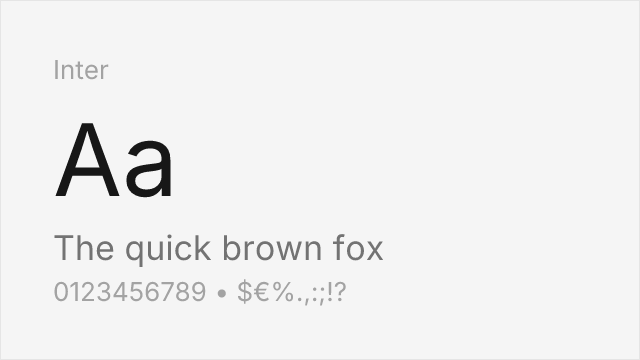
Closest functional match with better screen optimization and broader language support
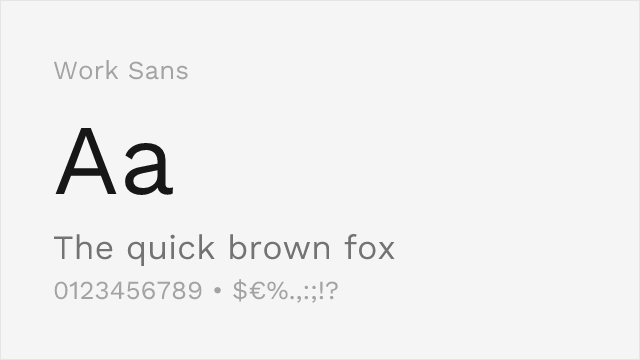
Similar editorial sans-serif character with American gothic warmth
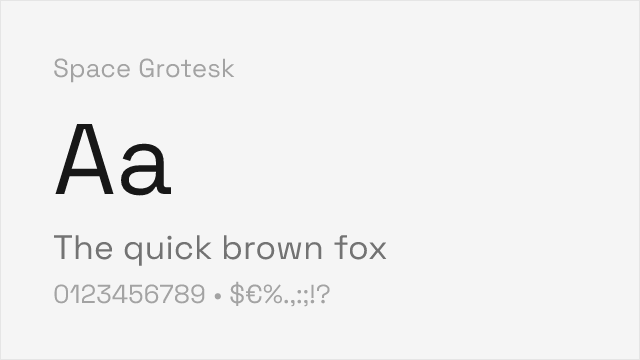
Shares quirky geometric details and a contemporary design-conscious feel
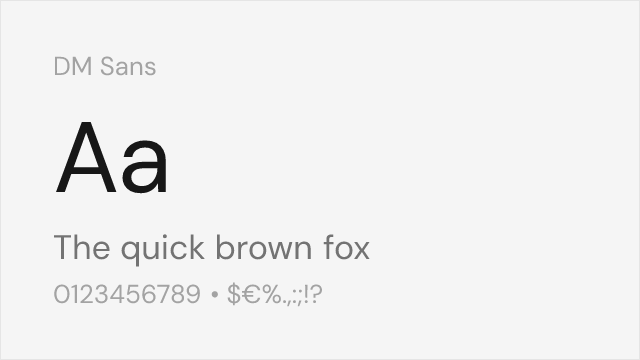
Clean modern proportions with geometric precision, less personality
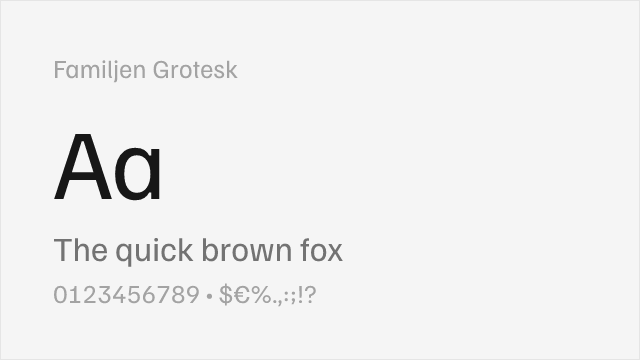
Contemporary grotesque with similar editorial sensibility and cultural positioning
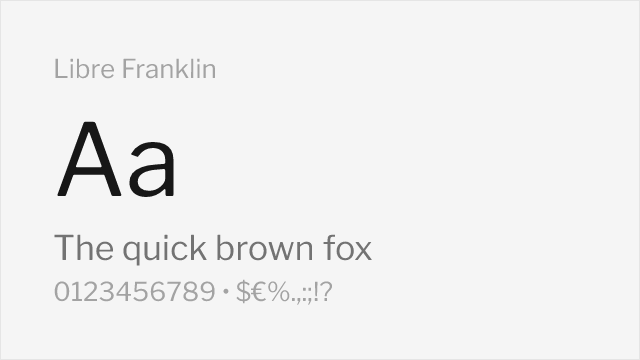
American grotesque heritage with similar editorial warmth and versatility
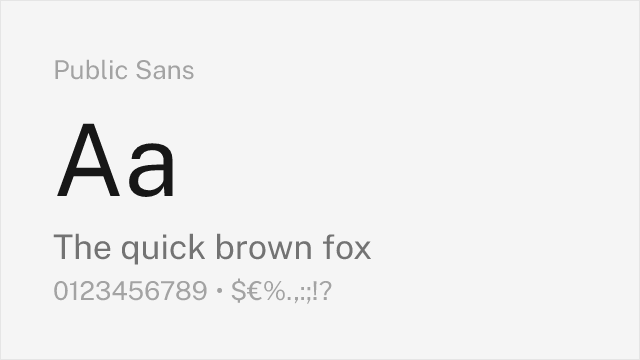
Neutral grotesque with similar structural bones but less personality
Compare the alternatives
See how Apercu compares to its top alternatives — and how those alternatives compare to each other — side by side.
See where Apercu is used in the wild and swap to free alternatives live.
Install FontSwap →Replacement Summary
Source: FontAlternatives.com
Premium font: Apercu
Best free alternative: Inter
FontAlternatives similarity score: 82%
Replacement difficulty: Medium
Best for: product UI and dashboard interfaces, SaaS marketing sites, design system foundations, projects prioritizing screen legibility over personality
Notable users: Barbican Centre, Wolff Olins, The Vinyl Factory
Not recommended when: Brand consistency with Barbican Centre requires exact letterforms
What is the best free alternative to Apercu?
Inter is the best free alternative to Apercu with a FontAlternatives similarity score of 82%.
Inter shares similar proportions, stroke characteristics, and intended use with Apercu. It is available under the OFL-1.1 license, which permits both personal and commercial use at no cost.
This alternative works particularly well for: product UI and dashboard interfaces, SaaS marketing sites, design system foundations, projects prioritizing screen legibility over personality.
Can I safely replace Apercu with Inter?
Yes, with some considerations. Inter achieves a FontAlternatives similarity score of 82%, indicating good structural compatibility for most use cases.
Licensing: Inter is licensed under OFL-1.1, which allows commercial use without licensing fees or royalties.
Weight coverage: Most weights have close or exact matches available.
When should I NOT replace Apercu?
While Inter is a strong alternative, there are situations where replacing Apercu may not be appropriate:
- Optical precision requirements: Inter has measurable structural differences from Apercu that may be visible in precise design work.
- Strict compliance: Verify that OFL-1.1 terms meet your specific legal and compliance requirements.
Weight-Matching Guide
Map Apercu weights to their closest free alternatives for accurate font substitution.
Inter
| Apercu | Inter | Match |
|---|---|---|
| Light (300) | Light (300) | exact |
| Regular (400) | Regular (400) | close |
| Medium (500) | Medium (500) | close |
| Bold (700) | Bold (700) | close |
Work Sans
| Apercu | Work Sans | Match |
|---|---|---|
| Light (300) | Light (300) | exact |
| Regular (400) | Regular (400) | exact |
| Medium (500) | Medium (500) | exact |
| Bold (700) | Bold (700) | close |
Space Grotesk
| Apercu | Space Grotesk | Match |
|---|---|---|
| Light (300) | Light (300) | close |
| Regular (400) | Regular (400) | close |
| Medium (500) | Medium (500) | close |
| Bold (700) | Bold (700) | close |
DM Sans
| Apercu | DM Sans | Match |
|---|---|---|
| Light (300) | Light (300) | close |
| Regular (400) | Regular (400) | close |
| Medium (500) | Medium (500) | close |
| Bold (700) | Semi Bold (600) | substitute |
Familjen Grotesk
| Apercu | Familjen Grotesk | Match |
|---|---|---|
| Regular (400) | Regular (400) | close |
| Medium (500) | Medium (500) | close |
| Bold (700) | Bold (700) | close |
Libre Franklin
| Apercu | Libre Franklin | Match |
|---|---|---|
| Light (300) | Light (300) | close |
| Regular (400) | Regular (400) | close |
| Medium (500) | Medium (500) | close |
| Bold (700) | Bold (700) | close |
Public Sans
| Apercu | Public Sans | Match |
|---|---|---|
| Light (300) | Light (300) | close |
| Regular (400) | Regular (400) | close |
| Medium (500) | Medium (500) | close |
| Bold (700) | Bold (700) | close |
Performance Guide
Production performance metrics for each alternative.
How to Use Inter
Copy these code snippets to quickly add Inter to your project.
CSS code for Inter
@import url('https://fonts.googleapis.com/css2?family=Inter:wght@100..900&display=swap');HTML code for Inter
<link rel="preconnect" href="https://fonts.googleapis.com">
<link rel="preconnect" href="https://fonts.gstatic.com" crossorigin>
<link href="https://fonts.googleapis.com/css2?family=Inter:wght@100..900&display=swap" rel="stylesheet">
Tailwind code for Inter
// tailwind.config.js
module.exports = {
  theme: {
    extend: {
      fontFamily: {
        'inter': ['Inter', 'sans-serif'],
      },
    },
  },
}

// Usage in HTML:
// <p class="font-inter">Your text here</p>
Next.js code for Inter
// Using next/font (Next.js 13+)
import { Inter } from 'next/font/google';

const inter = Inter({
  subsets: ['latin'],
  weight: ['100', '200', '300', '400', '500', '600', '700', '800', '900'],
});

export default function Component() {
  return (
    <p className={inter.className}>
      Your text here
    </p>
  );
}

// Or using inline styles with Google Fonts link:
// <p style={{ fontFamily: "'Inter'" }}>Your text</p>
Expo and React Native code for Inter
// Install: npx expo install @expo-google-fonts/inter expo-font
import { useFonts, Inter_400Regular } from '@expo-google-fonts/inter';

export default function App() {
  const [fontsLoaded] = useFonts({
    Inter_400Regular,
  });

  if (!fontsLoaded) return null;

  return (
    <Text style={{ fontFamily: 'Inter_400Regular' }}>
      Your text here
    </Text>
  );
}
Recommended Font Pairings
These free fonts pair well with Inter Apercu for headlines, body text, or accent use.
Source Serif Pro's sturdy, rational serifs provide editorial contrast against Apercu's clean but quirky grotesque headlines — both typefaces share a modern, disciplined approach that works for editorial layouts and brand identity systems where the sans-serif leads and the serif grounds
Literata's warm, contemporary serifs balance Apercu's crisp precision and quirky personality for editorial layouts that need reading comfort alongside modern branding — the combination echoes the kind of typographic pairings found in independent art and design publications
Cormorant Garamond's high-contrast elegance against Apercu's hybrid grotesque creates the kind of dramatic editorial pairing favored by creative agencies and cultural institutions — the tension between classical refinement and contemporary quirkiness produces visual sophistication without pretension
Browse Alternatives by Context
Find Apercu alternatives filtered by specific use case, style, or language support.
By Use Case
By Script
Frequently Asked Questions
What is the best free alternative to Apercu?
Inter is the best free alternative to Apercu with a FontAlternatives similarity score of 82%. It shares similar proportions and characteristics while being available under the OFL-1.1 license for both personal and commercial use at no cost.
Is there a free version of Apercu?
There is no official free version of Apercu. However, Inter is available under the OFL-1.1 open-source license and achieves a FontAlternatives similarity score of 82%. It includes variable weights and supports latin, latin-extended.
What Google Font looks like Apercu?
The Google Fonts most similar to Apercu are Inter, Work Sans, Space Grotesk. Among these alternatives, Inter offers the closest match with a FontAlternatives similarity score of 82% and includes variable weights for flexible typography options.
Can I use Inter commercially?
Yes, Inter can be used commercially. It is licensed under OFL-1.1, which allows free use in websites, applications, print materials, and commercial projects without purchasing a license or paying royalties.
Is Inter similar enough to Apercu?
Inter achieves a FontAlternatives similarity score of 82% compared to Apercu. While not identical, it offers comparable letterforms, proportions, and visual style. Most designers find it works excellently as a substitute in web and print projects.
What are the main differences between Apercu and its free alternatives?
Free alternatives to Apercu may differ in subtle details like letter spacing, curve refinements, and available weights. Premium fonts typically include more OpenType features, extended language support, and optimized screen rendering. However, for most projects, these differences are negligible.
Where can I download free alternatives to Apercu?
Download Inter directly from Google Fonts. Click the "Get Font" button on any alternative listed above to visit the official download page. Google Fonts also provides convenient embed codes for seamless web integration.