Free Alternatives to GT America

About GT America
- Foundry
- Grilli Type
- Classification
- sans-serif
- Style
- neo-grotesque
Brands Using GT America
Studio brand identity and project communications
Brand identities, product interfaces, and marketing materials
GT America Condensed in the 2021 network rebrand by Trollback+Company
Supporting text typeface in the 2022 identity by Studio Round
 See GT America live on these sites with FontSwap →
GT America is a sans-serif typeface designed by Noël Leu at Grilli Type, released in 2017. The typeface's name declares its conceptual premise: GT America is a deliberate synthesis of the American gothic tradition (Franklin Gothic, News Gothic, Trade Gothic) and the European neo-grotesque tradition (Helvetica, Univers, Akzidenz-Grotesk). Where most contemporary sans-serifs align clearly with one lineage or the other, GT America bridges the Atlantic, creating a typeface that feels simultaneously direct and refined, pragmatic and considered.
GT America requires a paid license from Grilli Type. Desktop, web, and app licenses are priced per style, with web licenses tiered by page views. Grilli Type offers trial fonts for testing. If your budget cannot accommodate Grilli Type's licensing structure, this page covers the best open-source alternatives and what to evaluate when choosing one.
Why GT America Matters
GT America matters because it solved a specific problem that designers had been working around for years: the choice between American gothic warmth and Swiss grotesque precision felt like an either-or decision. Franklin Gothic was sturdy and characterful but too rough for digital interfaces. Helvetica was universal but carried decades of institutional baggage. GT America synthesized the two traditions into something that felt genuinely new — a typeface with Franklin Gothic's directness and Helvetica's structural discipline, without the historical weight of either.
Noël Leu's design process was explicitly comparative. He studied the proportions, stroke modulation, and spacing conventions of both traditions, then built GT America as a carefully calibrated midpoint. The result is a typeface that reads as distinctly American in character — confident, broad-shouldered, pragmatic — while maintaining the rationalist construction that European grotesques are known for.
This synthesis resonated immediately with the tech and design industry. Grilli Type reported that GT America became their fastest-selling typeface within months of release. Design studios like IDEO adopted it for brand work. Broadcasters reached for its condensed widths — ABC deployed GT America Condensed in its 2021 network rebrand — while cultural institutions such as Melbourne Theatre Company used it as a supporting text face in their identity systems. The typeface's appeal to these organizations was consistent: they wanted a modern workhorse that communicated authority without formality, and precision without coldness.
GT America's superfamily structure amplifies its utility. The family includes six widths — Compressed, Condensed, Standard, Extended, Expanded, and Mono — with each width available in multiple weights. This breadth means a single typeface license can support an entire brand system, from tight data tables (Condensed) to bold headlines (Extended) to code blocks (Mono). Few typefaces, free or premium, offer this range.
The cultural positioning is precise. GT America signals "we care about design but we are not precious about it." It reads as professional without being corporate, modern without being trendy. This tonal accuracy is why it has become a default choice for the design-conscious technology sector.
Design Characteristics
GT America's design reveals its transatlantic synthesis through specific structural choices:
- Moderate x-height with generous counters: The x-height sits between Franklin Gothic's compact proportions and Helvetica's taller forms, creating a reading rhythm that feels contemporary without the exaggerated x-heights of screen-first fonts like Inter
- Semi-open apertures: The
c,e, andsare more open than Helvetica but less aggressively open than Aktiv Grotesk. This calibration gives GT America its characteristic blend of clarity and typographic density - Low stroke contrast with grotesque modulation: Strokes are nearly monolinear but carry subtle thickness variation inherited from the American gothic tradition, particularly visible in the
a,e, andswhere junctions require careful weight management - Squared curves with grotesque tension: The
o,b,d, andpfeature slight flattening on horizontal extremes — more square than Helvetica's circular bowls, less sharp than DIN's geometric forms. This is GT America's most distinctive feature - Horizontal terminals with American directness: Stroke endings are clean-cut and horizontal, contributing to the typeface's confident, no-nonsense personality
- Distinctive
Gwith spur: The uppercaseGfeatures a horizontal spur that nods to American gothic convention, one of the clearest signals of the typeface's transatlantic identity - Six widths from Compressed to Expanded: The width range is GT America's greatest structural asset, with each width carefully redesigned (not mechanically compressed or stretched) to maintain consistent typographic color
Where GT America Excels
GT America performs best in contexts that reward its specific blend of authority and modernity:
- Technology company branding: The transatlantic synthesis reads as globally fluent — neither too European nor too American — making it ideal for tech companies with international audiences
- Editorial design and publishing: The comprehensive width range supports complex editorial hierarchies, from condensed captions to extended headlines, within a single typeface family
- Corporate identity systems: The six widths and multiple weights provide enough variation to support everything from business cards to annual reports without supplementary typefaces
- SaaS product interfaces: GT America Standard works at UI text sizes with the same authority it brings to marketing headlines, providing brand consistency across product and marketing
- Advertising and campaign work: The bolder weights and wider widths have the confidence and scale presence that advertising typography demands
- Data-rich presentations: GT America Condensed handles dense data tables and charts with clarity, while Standard and Extended provide hierarchy for narrative sections
Where GT America Struggles
GT America has specific limitations worth understanding:
- Warm or playful contexts: The typeface's directness can read as blunt in contexts that need warmth, friendliness, or whimsy — children's brands, wellness products, casual consumer apps
- Script and language coverage: GT America supports Latin and Latin Extended only. Projects requiring Cyrillic, Greek, Arabic, or CJK scripts need fallback strategies or a different primary typeface
- Very small screen sizes: While well-crafted, GT America lacks the aggressive screen hinting of fonts engineered specifically for 12-14px rendering on low-resolution displays. It performs best at 16px and above on screen
- Variable font workflows: GT America ships as static files only. Teams using variable font workflows for web performance optimization cannot use GT America natively and must subset manually
- Budget-constrained projects: Licensing the full superfamily (six widths, multiple weights) is a significant investment. Many teams buy only Standard width and miss the family's greatest strength
- Extremely formal or traditional contexts: Despite its authority, GT America reads as contemporary. Law firms, heritage institutions, and contexts requiring classical gravitas may find it too modern
How to Choose a Free Substitute
When evaluating GT America replacements, focus on these criteria:
Tonal balance: GT America's defining quality is its blend of American directness and European refinement. Test your candidate in a brand context — does it feel simultaneously confident and considered? Inter achieves this through screen-first rationalism; Work Sans through American gothic warmth. Neither is a perfect match, but both capture different aspects of GT America's personality.
Width availability: GT America's superfamily spans six widths. No free font replicates this range, so identify which width you actually use most. If it is Standard, Inter or Work Sans are strong matches. If Condensed, Barlow's slightly narrow proportions may be closer. If Extended, you may need a different approach entirely.
Weight distribution: GT America's weight steps are carefully calibrated so that Light, Regular, Medium, Bold, and Black each feel distinctly different without jarring transitions. Compare weight ramps by setting a simple hierarchy (headline in Bold, subhead in Medium, body in Regular, captions in Light) and checking that the visual separation matches.
Typographic color in paragraphs: Set a full paragraph of body text at 16px in both GT America and your candidate. The paragraph should produce even typographic color without dark or light spots. GT America's semi-open apertures create a specific density — not as airy as Inter, not as tight as Helvetica.
Editorial stress test: If your project involves editorial work, set a magazine-style spread with headlines, subheads, pull quotes, and body text. GT America excels at this kind of complex hierarchy. Your replacement needs to maintain visual cohesion across these roles without looking generic.
Premium Font Neighbors
If GT America's approach resonates but you want to explore adjacent options:
Cluster A: Transatlantic and American-influenced grotesques
- Acumin (Adobe/Robert Slimbach) — a neo-grotesque with extensive width and weight options; more purely European in character than GT America
- Atlas Grotesk (Commercial Type) — Kai Bernau's grotesque with similar breadth; leans more toward Swiss rationalism
- Founders Grotesk (Klim Type Foundry) — Kris Sowersby's take on the grotesque tradition; tighter and more condensed than GT America
Cluster B: Contemporary editorial grotesques
- Graphik (Commercial Type) — the pre-Söhne tech standard; more neutral and less characterful than GT America
- Calibre (Klim Type Foundry) — tighter, more utilitarian than GT America, with a similar tech-sector audience
- Helvetica Now (Monotype) — the updated Helvetica that GT America was partly designed to replace
- Neue Haas Unica (Monotype) — the Helvetica-Univers hybrid; shares GT America's synthesis instinct
FAQ
Is GT America free?
No. GT America is a premium typeface from Grilli Type with per-style licensing. Desktop licenses start per weight, and web licenses are tiered by monthly page views. Grilli Type offers free trial fonts for testing before purchase. The full superfamily (all widths and weights) represents a significant investment.
What is the best free alternative to GT America?
Inter is the closest free alternative at 86% similarity. Both share a disciplined grotesque construction with screen-optimized proportions. Inter's variable font support and broader language coverage (Cyrillic, Greek) provide practical advantages, though it lacks GT America's distinctive transatlantic character and superfamily width range.
Why is GT America so popular with tech companies?
GT America occupies the precise tonal space that design-conscious tech companies seek: authoritative without being corporate, modern without being trendy, neutral without being generic. Its transatlantic synthesis reads as globally fluent, and the superfamily's six widths support the complex typographic needs of companies that span product interfaces, marketing, and corporate communications. It signals design investment without design preciousness.
What is the difference between GT America and Helvetica?
GT America was explicitly designed as a synthesis of American gothic and European grotesque traditions, while Helvetica is purely Swiss neo-grotesque. GT America has more open apertures, squared curve tension, and a directness inherited from Franklin Gothic that Helvetica lacks. GT America's superfamily includes six distinct widths (each redesigned, not mechanically scaled), while Helvetica's width variants were historically less carefully differentiated. Culturally, GT America signals contemporary design awareness; Helvetica signals institutional default.
Is GT America a variable font?
No. GT America ships as static font files across all widths and weights. For a superfamily with six widths and multiple weights per width, this means potentially dozens of individual font files — loading even three widths at three weights each produces nine HTTP requests and significant file size overhead. This is where the lack of variable font support hurts most: the superfamily breadth that is GT America's greatest design asset becomes its biggest web performance liability. Most of GT America's free alternatives (Inter, Work Sans, DM Sans) are available as variable fonts.
Does GT America support Cyrillic?
No. GT America supports Latin and Latin Extended scripts only. For projects requiring Cyrillic support, Inter (Cyrillic, Greek) or IBM Plex Sans (Cyrillic, Greek, Arabic, Devanagari) are the standard open-source alternatives that maintain a compatible aesthetic.
Who designed GT America?
Noël Leu designed GT America for Grilli Type, a Swiss foundry based in Zurich. Leu's design process was explicitly comparative — studying the proportions and conventions of American gothic and European grotesque traditions to build a typeface at their intersection. Grilli Type, founded by Noël Leu and Thierry Blancpain, has become one of the most influential independent foundries in contemporary type design.
What widths does GT America come in?
GT America includes six widths: Compressed, Condensed, Standard, Extended, Expanded, and Mono. Each width is a complete redesign rather than a mechanical compression or expansion, with adjusted proportions, spacing, and stroke details. This range is one of GT America's greatest advantages over free alternatives, none of which offer comparable width variety.
How does GT America compare to Graphik?
Both are popular tech-sector grotesques, but they differ in character. Graphik is more purely neutral — Christian Schwartz described it as "emphatically vanilla." GT America has more personality through its American gothic influence — it is more direct and confident. Graphik predates GT America by eight years and was the default tech sans before Söhne emerged. GT America offers a wider superfamily (six widths vs. Graphik's three), making it more versatile for complex brand systems.
Can I use GT America for both print and digital?
Yes, GT America performs well in both contexts. The careful stroke construction and moderate contrast translate well to print at standard body sizes (9-12pt), while the screen-optimized spacing works at digital sizes (14-18px). However, print and digital use require separate licenses from Grilli Type, and the per-style pricing means building a comprehensive print+digital system can be expensive.
Is GT America on Google Fonts?
No, GT America is a premium font from Grilli Type and is not available on Google Fonts.
The closest Google Fonts alternative is Inter with 86% similarity. Get it free on Google Fonts ↗
Free Alternatives (7)
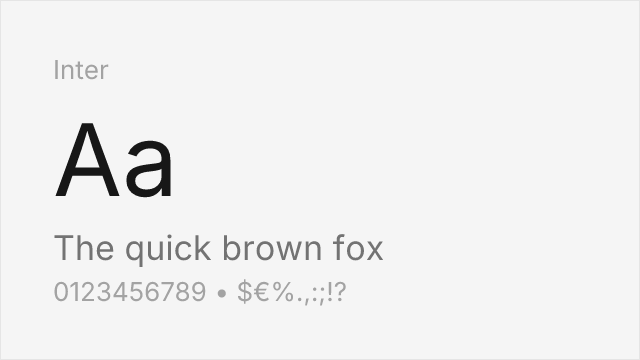
Closest overall match with screen-optimized proportions and comprehensive weight range
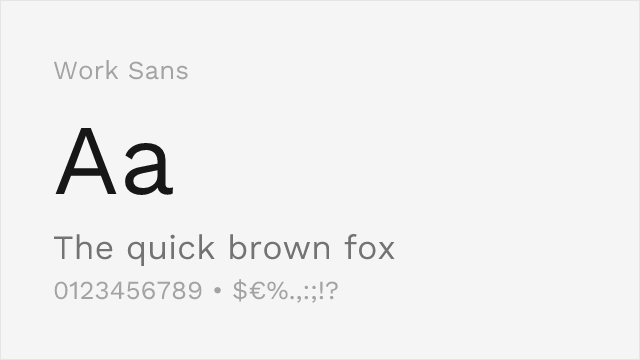
American gothic heritage with comparable editorial warmth and weight range
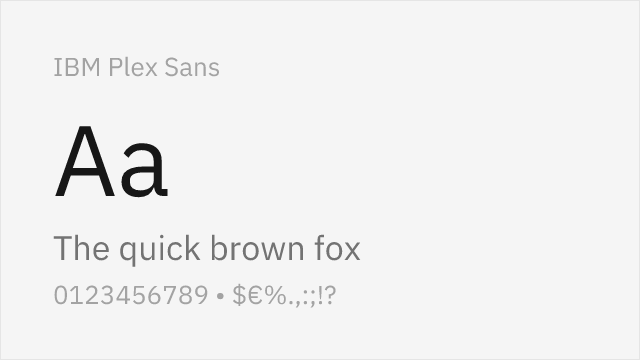
Corporate grotesque with similar rational construction and enterprise credibility
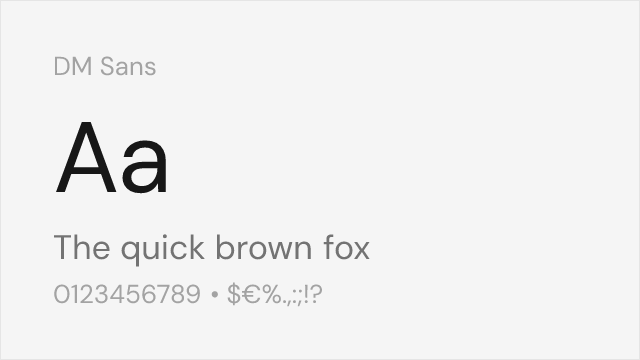
Clean geometric-grotesque blend with modern proportions and broad weight range
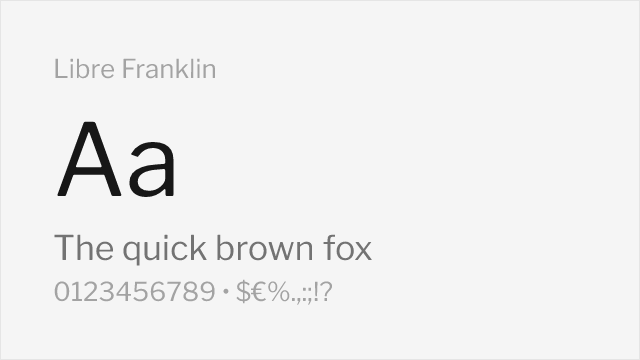
Faithful Franklin Gothic revival sharing GT America's American gothic heritage
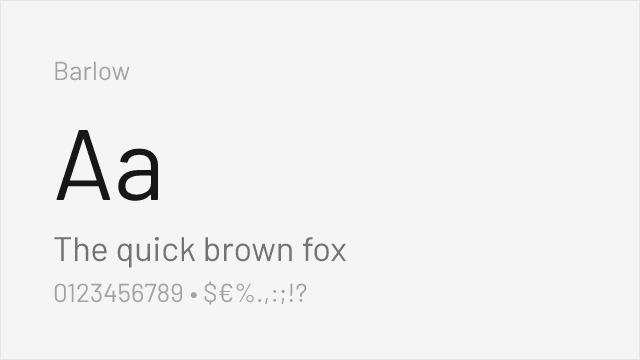
Slightly condensed grotesque with utilitarian character and comprehensive weight range
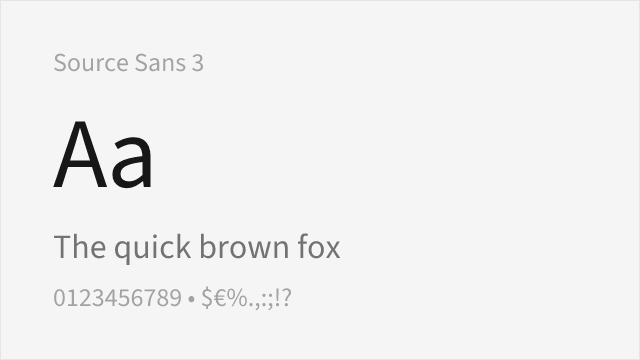
Adobe's workhorse sans with proven enterprise reliability and broad language support
Compare the alternatives
See how GT America compares to its top alternatives — and how those alternatives compare to each other — side by side.
See where GT America is used in the wild and swap to free alternatives live.
Install FontSwap →Replacement Summary
Source: FontAlternatives.com
Premium font: GT America
Best free alternative: Inter
FontAlternatives similarity score: 86%
Replacement difficulty: Low
Best for: SaaS product interfaces, corporate design systems, content-heavy web applications, cross-platform brand typography
Notable users: IDEO, Various design-conscious technology companies, ABC
Not recommended when: Brand consistency with IDEO requires exact letterforms
What is the best free alternative to GT America?
Inter is the best free alternative to GT America with a FontAlternatives similarity score of 86%.
Inter shares similar proportions, stroke characteristics, and intended use with GT America. It is available under the OFL-1.1 license, which permits both personal and commercial use at no cost.
This alternative works particularly well for: SaaS product interfaces, corporate design systems, content-heavy web applications, cross-platform brand typography.
Can I safely replace GT America with Inter?
Yes, Inter is a high-confidence replacement for GT America. The FontAlternatives similarity score of 86% indicates strong structural compatibility.
Licensing: Inter is licensed under OFL-1.1, which allows commercial use without licensing fees or royalties.
Weight coverage: Most weights have close or exact matches available.
When should I NOT replace GT America?
While Inter is a strong alternative, there are situations where replacing GT America may not be appropriate:
- Strict compliance: Verify that OFL-1.1 terms meet your specific legal and compliance requirements.
Weight-Matching Guide
Map GT America weights to their closest free alternatives for accurate font substitution.
Inter
| GT America | Inter | Match |
|---|---|---|
| Thin (100) | Thin (100) | close |
| Regular (400) | Regular (400) | exact |
| Medium (500) | Medium (500) | exact |
| Bold (700) | Bold (700) | close |
Work Sans
| GT America | Work Sans | Match |
|---|---|---|
| Light (300) | Light (300) | exact |
| Regular (400) | Regular (400) | exact |
| Medium (500) | Medium (500) | exact |
| Bold (700) | Bold (700) | close |
IBM Plex Sans
| GT America | IBM Plex Sans | Match |
|---|---|---|
| Thin (100) | Thin (100) | close |
| Regular (400) | Regular (400) | exact |
| Medium (500) | Medium (500) | exact |
| Bold (700) | Bold (700) | exact |
DM Sans
| GT America | DM Sans | Match |
|---|---|---|
| Light (300) | Light (300) | close |
| Regular (400) | Regular (400) | close |
| Medium (500) | Medium (500) | close |
| Bold (700) | Bold (700) | close |
Libre Franklin
| GT America | Libre Franklin | Match |
|---|---|---|
| Light (300) | Light (300) | close |
| Regular (400) | Regular (400) | close |
| Medium (500) | Medium (500) | substitute |
| Bold (700) | Bold (700) | close |
Barlow
| GT America | Barlow | Match |
|---|---|---|
| Thin (100) | Thin (100) | close |
| Regular (400) | Regular (400) | close |
| Medium (500) | Medium (500) | close |
| Bold (700) | Bold (700) | close |
Source Sans 3
| GT America | Source Sans 3 | Match |
|---|---|---|
| Light (300) | Light (300) | close |
| Regular (400) | Regular (400) | close |
| Medium (500) | Medium (500) | substitute |
| Bold (700) | Bold (700) | close |
Performance Guide
Production performance metrics for each alternative.
How to Use Inter
Copy these code snippets to quickly add Inter to your project.
CSS code for Inter
@import url('https://fonts.googleapis.com/css2?family=Inter:wght@100..900&display=swap');HTML code for Inter
<link rel="preconnect" href="https://fonts.googleapis.com">
<link rel="preconnect" href="https://fonts.gstatic.com" crossorigin>
<link href="https://fonts.googleapis.com/css2?family=Inter:wght@100..900&display=swap" rel="stylesheet">
Tailwind code for Inter
// tailwind.config.js
module.exports = {
  theme: {
    extend: {
      fontFamily: {
        'inter': ['Inter', 'sans-serif'],
      },
    },
  },
}

// Usage in HTML:
// <p class="font-inter">Your text here</p>
Next.js code for Inter
// Using next/font (Next.js 13+)
import { Inter } from 'next/font/google';

const inter = Inter({
  subsets: ['latin'],
  weight: ['100', '200', '300', '400', '500', '600', '700', '800', '900'],
});

export default function Component() {
  return (
    <p className={inter.className}>
      Your text here
    </p>
  );
}

// Or using inline styles with Google Fonts link:
// <p style={{ fontFamily: "'Inter'" }}>Your text</p>
Expo and React Native code for Inter
// Install: npx expo install @expo-google-fonts/inter expo-font
import { useFonts, Inter_400Regular } from '@expo-google-fonts/inter';

export default function App() {
  const [fontsLoaded] = useFonts({
    Inter_400Regular,
  });

  if (!fontsLoaded) return null;

  return (
    <Text style={{ fontFamily: 'Inter_400Regular' }}>
      Your text here
    </Text>
  );
}
Recommended Font Pairings
These free fonts pair well with Inter GT America for headlines, body text, or accent use.
Literata's contemporary serifs provide warm editorial contrast to GT America's rational grotesque forms. Both share editorial DNA and screen-optimized rendering, making them a natural pair for digital publications and content platforms that need sophisticated hierarchy.
EB Garamond's classical elegance creates rich typographic contrast against GT America's modern American directness. This pairing works well for cultural institutions and luxury branding where historical depth needs to coexist with contemporary clarity.
Crimson Pro's sturdy, readable serifs complement GT America's clean sans-serif headlines in editorial contexts. Both are designed for sustained reading, making them an effective pair for long-form content and publishing platforms.
Browse Alternatives by Context
Find GT America alternatives filtered by specific use case, style, or language support.
By Use Case
By Script
Frequently Asked Questions
What is the best free alternative to GT America?
Inter is the best free alternative to GT America with a FontAlternatives similarity score of 86%. It shares similar proportions and characteristics while being available under the OFL-1.1 license for both personal and commercial use at no cost.
Is there a free version of GT America?
There is no official free version of GT America. However, Inter is available under the OFL-1.1 open-source license and achieves a FontAlternatives similarity score of 86%. It includes variable weights and supports latin, latin-extended.
What Google Font looks like GT America?
The Google Fonts most similar to GT America are Inter, Work Sans, IBM Plex Sans. Among these alternatives, Inter offers the closest match with a FontAlternatives similarity score of 86% and includes variable weights for flexible typography options.
Can I use Inter commercially?
Yes, Inter can be used commercially. It is licensed under OFL-1.1, which allows free use in websites, applications, print materials, and commercial projects without purchasing a license or paying royalties.
Is Inter similar enough to GT America?
Inter achieves a FontAlternatives similarity score of 86% compared to GT America. While not identical, it offers comparable letterforms, proportions, and visual style. Most designers find it works excellently as a substitute in web and print projects.
What are the main differences between GT America and its free alternatives?
Free alternatives to GT America may differ in subtle details like letter spacing, curve refinements, and available weights. Premium fonts typically include more OpenType features, extended language support, and optimized screen rendering. However, for most projects, these differences are negligible.
Where can I download free alternatives to GT America?
Download Inter directly from Google Fonts. Click the "Get Font" button on any alternative listed above to visit the official download page. Google Fonts also provides convenient embed codes for seamless web integration.