Free Alternatives to Lyon Text

About Lyon Text
- Foundry
- Commercial Type
- Classification
- serif
- Style
- editorial
Brands Using Lyon Text
Lyon's documented debut, in the magazine's editorial typography
Lyon Display and Lyon Text across the magazine and website
One of its text faces, alongside Futura and Life
Lyon Text in the magazine's editorial design
 See Lyon Text live on these sites with FontSwap →
Lyon Text is a contemporary editorial serif typeface designed by Kai Bernau and released by Commercial Type. The name looks back to Lyon's stature as one of the great centres of Renaissance printing — the 16th-century city whose punchcutters, Robert Granjon foremost among them, set the model for the readable old-style book faces that Lyon reinterprets through a distinctly modern sensibility. The family ships in three optical cuts: Lyon Text for body copy, Lyon Display for headlines, and Lyon Hed, an extra-large cut drawn for the most extreme display sizes — each carefully calibrated for its intended scale. Since its release, Lyon has become one of the most widely used premium serifs in magazine and cultural publishing.
Lyon requires a paid license from Commercial Type. Pricing follows a per-project model with separate desktop, web, and app licenses. There is no free tier or trial version. If your budget cannot support Commercial Type's licensing, this page covers the best open-source alternatives and what to consider when selecting one.
Why Lyon Matters
Lyon's significance in contemporary editorial typography stems from its ability to feel simultaneously classical and modern. When The New York Times Magazine debuted Lyon in its editorial typography, it chose the face precisely because it conveyed literary seriousness without the stuffy traditionalism of historical revivals. Lyon reads as intelligent and current — a serif for readers who notice typography, designed by someone who understands that good text faces work by disappearing.
Kai Bernau's design philosophy is evident in every detail: Lyon does not call attention to itself through dramatic gestures or novel constructions. Instead, it achieves its contemporary character through subtle refinements — slightly compressed proportions, restrained contrast, and a precise rhythm that feels purposeful rather than mechanical. The result is a typeface that elevates content without competing with it.
This quality has made Lyon the default choice for a specific category of publication: the culturally literate magazine, the literary journal, the criticism platform where the typography needs to signal sophistication without overshadowing the writing. Publications like The Atlantic, The Gentlewoman, and The Baffler use Lyon because it positions their content as worthy of serious attention.
Lyon's roots run deeper than its contemporary surface suggests. Bernau built the face on the French Renaissance old-style tradition, drawing in particular on the work of the 16th-century punchcutter Robert Granjon, whose types helped set the template for readable book faces that editorial serifs still follow today. What separates Lyon from a straight historical revival is how selectively it borrows. It keeps the old-style skeleton — the humanist axis, the calligraphic italic, the warmth in the lowercase — but strips away the roughness and irregularity that mark faithful revivals of metal type. The proportions are tightened, the fitting is made even, and the details are cut with a precision that only the digital medium allows. The result reads as a Renaissance serif quietly brought up to date rather than a period piece under glass.
Design Characteristics
Lyon's design decisions reflect Bernau's training in both Swiss rationalism and French typographic tradition:
- Moderate, controlled contrast: The difference between thick and thin strokes is present but restrained, giving Lyon enough serif personality for editorial contexts while maintaining the even typographic color needed for long-form reading
- Slightly compressed proportions: Letters are narrower than classical transitional serifs, creating an efficient, contemporary text block that conserves column space without sacrificing readability
- Refined bracketed serifs: The serif transitions are smooth and precisely calibrated — substantial enough to anchor text on screen, refined enough to avoid visual heaviness
- Tall x-height: Lowercase letters are generously proportioned relative to capitals, optimizing legibility at the text sizes (10-14pt) where Lyon Text is designed to perform
- Restrained apertures: Counter openings are moderately open — more closed than screen-first designs like Merriweather, but sufficiently open to prevent muddy rendering at small sizes
- True italic with cursive character: Lyon's italic is not a slanted roman but a distinct cursive design with calligraphic influences, providing genuine rhythmic contrast for emphasis
- Three optical cuts: Lyon Text features sturdier strokes, wider spacing, and lower contrast for body copy; Lyon Display opens up the contrast and refines the details for headline use; and Lyon Hed pushes that logic further still for the very largest display settings
Lyon Text ships in five weights (Regular through Black, including a Regular No. 2) with matching italics; a Light weight appears only in the larger Display and Hed cuts, not in Lyon Text itself.
The optical cuts are the part of Lyon most worth understanding before you commit to it. Lyon Text is the reading cut. Its strokes are sturdier, its contrast is deliberately held in check, and its spacing is opened up so the face keeps an even color down a full column of body copy. Lyon Display is a different animal. At headline sizes the contrast climbs, the thin strokes pull back toward hairlines, the serifs sharpen, and the fitting tightens into something more elegant and more assertive. Lyon Hed carries that reasoning to its extreme, an extra-large cut reserved for the biggest settings, where every hairline and serif can be drawn with maximum delicacy. This is the same logic the old metal foundries followed when they cut separate punches for each size, because ink and paper behave differently at six points than at sixty. Bernau simply made that logic explicit and gave designers clearly labeled tools instead of one compromise.
Choosing the wrong cut is the most common way teams get Lyon wrong. Lyon Text blown up to a cover headline looks stolid and slightly overweight; Lyon Display shrunk down to caption size loses its fine strokes and turns brittle. The family reads as relatively high-contrast for an editorial serif, but that contrast lives mostly in the larger Display and Hed cuts — a distinction that matters a great deal once type leaves the body-copy sizes it was measured for.
Where Lyon Excels
Lyon is at its best in literary, cultural, and editorial contexts:
- Magazine feature articles: Lyon's refined personality elevates long-form journalism and cultural criticism without the formality of traditional newspaper serifs
- Literary journals and reviews: The intellectual character and comfortable reading rhythm make Lyon ideal for content that demands sustained attention from literate audiences
- Fashion and lifestyle editorial: Lyon's contemporary refinement suits publications that need sophistication without the coldness of geometric typefaces
- Cultural institution communications: Museums, galleries, and performing arts organizations use Lyon to signal cultural seriousness and design awareness
- Independent publisher identities: Lyon's distinctive but restrained character helps small publishers establish visual authority without the generic feel of system serifs
What unites these contexts is care. Lyon rewards layouts where someone has thought about the type — where there is room for generous margins, the right optical size for the job, and a pull quote set in italic that gets space to breathe. Give it that room and it repays the effort.
Where Lyon Struggles
No typeface is universal. Lyon underperforms in certain contexts:
- High-speed news production: Lyon's refined character is tuned for considered editorial design, not the rapid turnaround and cramped columns of daily news. Publico or Mercury handle that environment better
- UI and product interfaces: Lyon's editorial personality feels out of place in SaaS dashboards and app interfaces where sans-serifs dominate for practical reasons
- Very small sizes on screen: While Lyon Text is optimized for body copy, its slightly compressed proportions and moderate apertures can struggle below 12px on low-resolution displays
- Projects needing Cyrillic or Greek out of the box: the core Lyon offering is Latin. Cyrillic (drawn by Ilya Ruderman) and Greek (extended by Irene Vlachou in 2023) versions do exist — as do Lyon Arabic and Lyon Hebrew — but they are licensed separately and are not part of the default family, so multilingual publications covering Slavic or Greek content should budget for the extra cut or plan a fallback
- Casual or playful brands: Lyon's literary seriousness reads as inappropriately formal for brands targeting younger, casual, or entertainment-focused audiences
- Large sizes without the Display cut: Lyon Text is not a headline face. Push it much past 24px and its held-back contrast reads as heavy and a little inert. Doing Lyon justice at display sizes means licensing Lyon Display as a separate family, which roughly doubles the type budget
- Fine serifs on low-resolution screens: Lyon Display's sharpened serifs and hairline thins look lovely in print and on high-density screens, but on older or low-DPI displays the lighter weights can thin out to the point of shimmering or dropping away entirely
There is also the plain matter of cost. Lyon is licensed per project from Commercial Type, with desktop, web, and app licenses priced separately and web pricing scaling with monthly page views. A complete editorial system — Text and Display, roman and italic, several weights of each — adds up quickly, and for a small publisher or a personal site that math is often what sends teams to the free alternatives below.
How to Choose a Free Substitute
When evaluating Lyon replacements, prioritize these criteria:
- Reading rhythm at text sizes: Lyon's defining quality is how it feels during sustained reading — a quiet, steady rhythm that does not fatigue the eye. Set your alternative in a three-column magazine layout at 14-16px and read a full paragraph. Does it maintain that same comfortable cadence?
- Typographic color and evenness: Lyon produces a remarkably even gray value across paragraphs. Test your alternative in a full page of body text and squint — uneven color (dark spots, light gaps) indicates spacing or weight distribution issues
- Serif refinement: Lyon's serifs are precisely calibrated — neither delicate nor heavy. Alternatives with hairline serifs (Garamond-style) will read as too fragile for Lyon's contexts; heavy serifs will feel too blunt
- Weight range for editorial hierarchy: Magazine and journal design requires at least Regular, Medium or Semibold, and Bold to create article hierarchy. Check that your alternative covers these weight stations with consistent quality
- Italic quality: Lyon's true cursive italic is essential for emphasis, titles, and pull quotes in literary contexts. Verify that your alternative has a genuine italic design, not just a sloped roman
To turn those criteria into a shortlist, match the alternative to the job:
- Closest all-around match → Source Serif Pro. Its refined construction and cross-platform hinting make it the safest default for a general editorial system, and its optical-size axis approximates Lyon's Text-and-Display split inside a single family.
- Digital reading at scale → Literata or Merriweather. Both were engineered for the screen. Literata carries more literary refinement and an optical-size axis; Merriweather is sturdier and more utilitarian, a dependable workhorse for content-heavy sites.
- Warmth over strict matching → Lora. Its light calligraphic character suits culture and lifestyle pages where the serif should feel inviting rather than exacting.
- Classical, literary register → Crimson Pro or EB Garamond. These lean into the old-style heritage Lyon only nods at. Reach for them when the content wants overt Renaissance gravity, and for EB Garamond specifically when you need Greek or Cyrillic.
- Text-size fidelity on a budget → Libre Caslon Text. Drawn specifically for body sizes, though its Regular-and-Bold-only range limits how much hierarchy you can build.
- News and current-affairs pages → Newsreader. Its optical-size axis and screen-first drawing were made for exactly this kind of running editorial copy.
A useful shortcut is to choose by medium first. If the type lives mostly on screens, start with Source Serif Pro, Literata, or Newsreader, all of which were drawn for the display. If it lives mostly in print, or you want a more overtly historical character, Crimson Pro and EB Garamond will feel more at home.
Premium Font Neighbors
If Lyon's approach resonates but you want to explore adjacent options:
Cluster A: Literary editorial serifs (Lyon's direct competitors)
- Publico (Commercial Type) — more robust and newsroom-oriented than Lyon; designed for higher-stress production environments
- Mercury (Hoefler&Co) — sharper contrast and more assertive presence; the default for prestige American journalism
- Heldane (Klim Type Foundry) — a contemporary serif with calligraphic warmth that shares Lyon's literary positioning
- Domaine (Klim Type Foundry) — Kris Sowersby's editorial serif with more overt historical character than Lyon
Cluster B: Contemporary cultural serifs
- Tiempos (Klim Type Foundry) — occupies similar territory to Lyon with a slightly warmer, more accessible personality
- Guardian Egyptian (Commercial Type) — Lyon's stablemate; a slab serif with more visual weight for news and institutional use
- Sanomat (Commercial Type) — more idiosyncratic and personality-driven than Lyon; suits publications that want editorial flair
- Canela (Commercial Type) — Lyon's stablemate and a natural partner at large sizes; a high-contrast display face with softly flared terminals, built for the elegant headlines where Lyon Display would also sit comfortably
FAQ
Is Lyon free?
No. Lyon is a premium typeface from Commercial Type with per-project licensing. Desktop, web, and app licenses are priced separately. There is no free tier or trial version. For open-source alternatives, Source Serif Pro (85% similarity) is the closest match.
What is the best free alternative to Lyon?
Source Serif Pro is the closest free alternative at 85% similarity. Both share refined transitional serif construction optimized for editorial readability. Source Serif Pro adds variable font support, optical sizing, and out-of-the-box Cyrillic and Greek in a single free family — a practical convenience for teams migrating from Lyon, whose own Cyrillic and Greek are separately licensed extensions rather than part of the default offering.
What is the difference between Lyon Text, Lyon Display, and Lyon Hed?
Lyon Text is optimized for body copy at small to medium sizes (9-16pt), with sturdier strokes, wider letter spacing, and lower contrast for comfortable extended reading. Lyon Display is the headline and large-scale companion, with higher contrast, tighter fitting, and more refined details that emerge at display sizes. Lyon Hed goes further still — an extra-large cut reserved for the most extreme headline settings, where its hairlines and serifs can be drawn at their most delicate. All three share the same underlying design language.
Who uses Lyon?
Lyon is widely used in magazine and cultural publishing. Its documented debut was in The New York Times Magazine, where it shaped the magazine's editorial typography. Other notable users include The Atlantic (across both the magazine and its website), The Baffler, and The Gentlewoman — where it serves as one of the text faces alongside Futura and Life. Its refined, intellectual character makes it popular with design-aware editorial teams.
Does Lyon support Cyrillic?
Not in its default form. The core Lyon family is Latin, but Commercial Type does offer a Cyrillic version (drawn by Ilya Ruderman) and a Greek extension (added by Irene Vlachou in 2023), along with Lyon Arabic and Lyon Hebrew — each licensed separately rather than bundled into the standard family. If you need Cyrillic or Greek without a separate purchase, free alternatives like Source Serif Pro or EB Garamond include those scripts out of the box with comparable editorial quality.
Can I use Lyon on the web?
Yes, with a web font license from Commercial Type. Web licenses are priced by monthly page views. You receive WOFF2 files for self-hosting. Lyon is not available through Google Fonts, Adobe Fonts, or any font CDN service.
Who designed Lyon?
Kai Bernau, a German type designer who studied at the Royal Academy of Art (KABK) in The Hague. The typeface takes its name not from his biography but from the French city of Lyon itself — one of the great centres of 16th-century printing, home to punchcutters like Robert Granjon whose old-style types Lyon reinterprets. Bernau is also known for the typeface Neutral and his research-driven approach to type design.
Is Lyon an old-style or a transitional serif?
Lyon sits between the two. It borrows the humanist axis, calligraphic italic, and lowercase warmth of the old-style tradition — the lineage of 16th-century French punchcutters like Robert Granjon — while adopting some of the crisper detailing and even fitting associated with later, more refined faces, which is why it can be described either way. What makes it feel modern is less a change of category than a change of finish: the historical structure is kept, but the proportions, spacing, and details are drawn to contemporary standards rather than faithfully revived.
Which free Lyon alternative should I choose?
It depends on where the type will live. Source Serif Pro is the strongest all-around match and the safest default. For digital reading at scale, Literata and Merriweather were both engineered for screens. For a warmer, more literary feel, Lora or Crimson Pro work well, and EB Garamond adds Greek and Cyrillic coverage. Newsreader suits news and current-affairs pages, while Libre Caslon Text is drawn specifically for body sizes if you are matching a print-style layout.
What fonts pair well with Lyon?
Lyon pairs best with clean, modern sans-serifs that provide contrast without competing with its refined editorial character. Work Sans, DM Sans, and Libre Franklin all work well as headline or navigation companions. The key is choosing sans-serifs that match Lyon's intellectual seriousness rather than undercutting it with casual or decorative personality.
Is Lyon Text on Google Fonts?
No, Lyon Text is a premium font from Commercial Type and is not available on Google Fonts.
The closest Google Fonts alternative is Source Serif Pro with 85% similarity. Get it free on Google Fonts ↗
Free Alternatives (8)
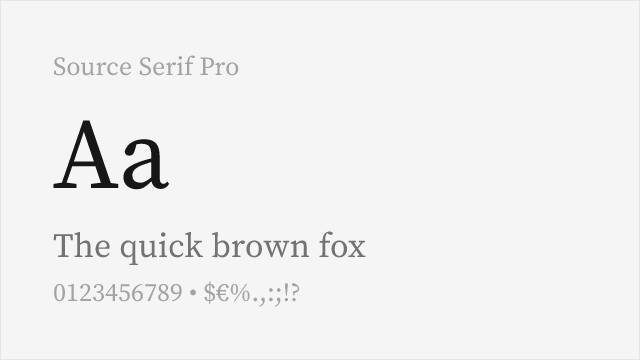
Closest structural match with refined proportions and excellent editorial performance
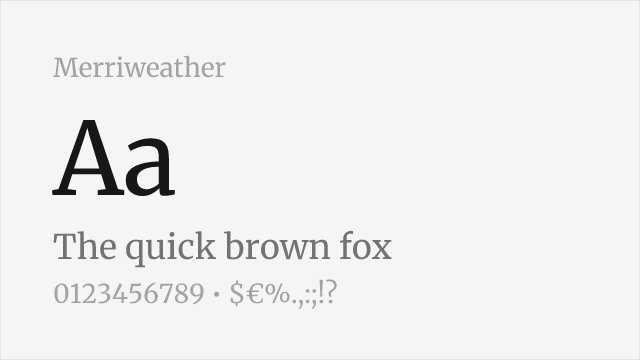
Robust screen-optimized serif with dependable editorial presence
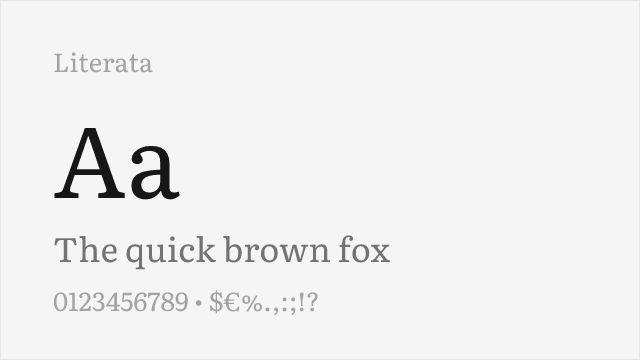
Google's reading-optimized serif with optical sizing and contemporary refinement
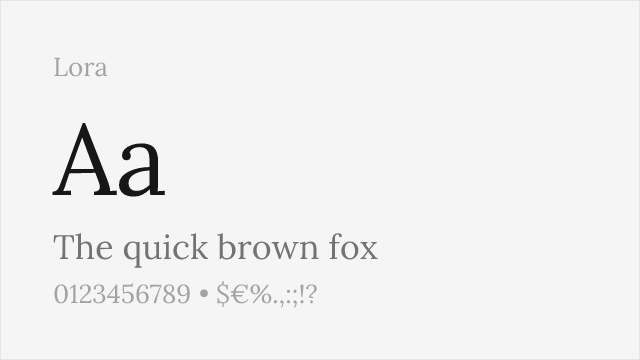
Calligraphically influenced editorial serif with elegant character
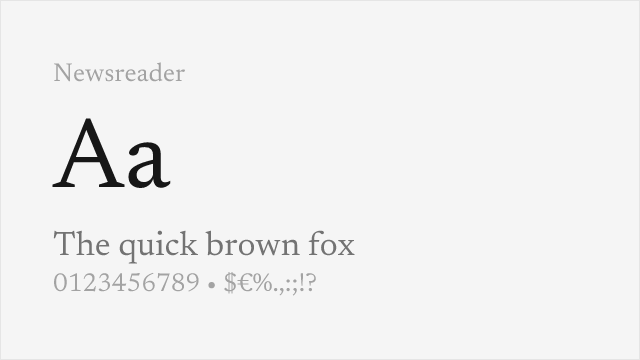
Editorial serif with optical size axis for news contexts
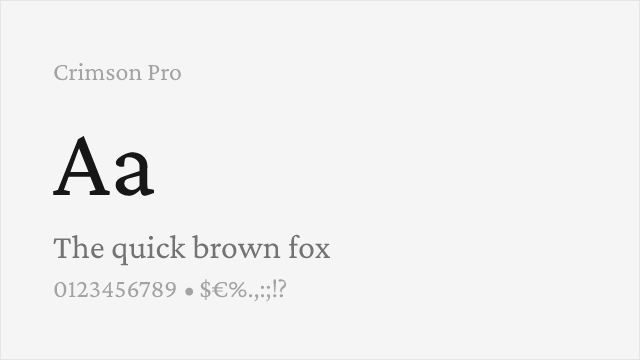
Refined old-style serif with classical grace and comprehensive weights
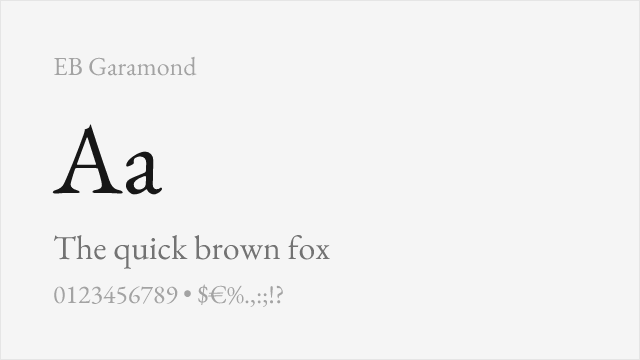
Scholarly humanist serif with exceptional historical character and language coverage
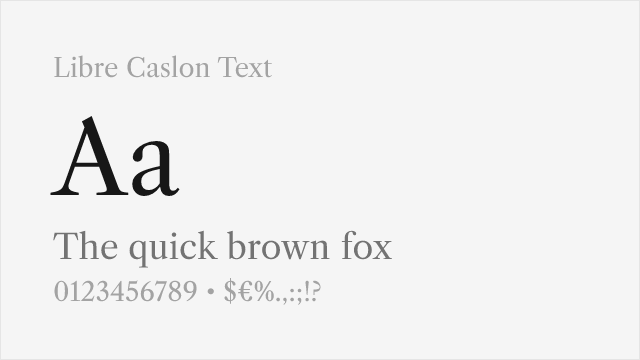
Warm Caslon revival optimized for body text with editorial reliability
Compare the alternatives
See how Lyon Text compares to its top alternatives — and how those alternatives compare to each other — side by side.
See where Lyon Text is used in the wild and swap to free alternatives live.
Install FontSwap →Replacement Summary
Source: FontAlternatives.com
Premium font: Lyon Text
Best free alternative: Source Serif Pro
FontAlternatives similarity score: 85%
Replacement difficulty: Low
Best for: editorial and literary publications, long-form journalism platforms, magazine feature layouts, multilingual publishing systems
Notable users: The New York Times Magazine, The Atlantic, The Gentlewoman
Not recommended when: Brand consistency with The New York Times Magazine requires exact letterforms
What is the best free alternative to Lyon Text?
Source Serif Pro is the best free alternative to Lyon Text with a FontAlternatives similarity score of 85%.
Source Serif Pro shares similar proportions, stroke characteristics, and intended use with Lyon Text. It is available under the OFL-1.1 license, which permits both personal and commercial use at no cost.
This alternative works particularly well for: editorial and literary publications, long-form journalism platforms, magazine feature layouts, multilingual publishing systems.
Can I safely replace Lyon Text with Source Serif Pro?
Yes, Source Serif Pro is a high-confidence replacement for Lyon Text. The FontAlternatives similarity score of 85% indicates strong structural compatibility.
Licensing: Source Serif Pro is licensed under OFL-1.1, which allows commercial use without licensing fees or royalties.
Weight coverage: Most weights have close or exact matches available.
When should I NOT replace Lyon Text?
While Source Serif Pro is a strong alternative, there are situations where replacing Lyon Text may not be appropriate:
- Strict compliance: Verify that OFL-1.1 terms meet your specific legal and compliance requirements.
Weight-Matching Guide
Map Lyon Text weights to their closest free alternatives for accurate font substitution.
Source Serif Pro
| Lyon Text | Source Serif Pro | Match |
|---|---|---|
| Regular (400) | Regular (400) | exact |
| Semibold (600) | Semibold (600) | exact |
| Bold (700) | Bold (700) | exact |
| Black (800) | Black (900) | close |
Merriweather
| Lyon Text | Merriweather | Match |
|---|---|---|
| Regular (400) | Regular (400) | exact |
| Bold (700) | Bold (700) | exact |
| Black (800) | Black (900) | close |
Literata
| Lyon Text | Literata | Match |
|---|---|---|
| Regular (400) | Regular (400) | exact |
| Semibold (600) | Semibold (600) | exact |
| Bold (700) | Bold (700) | exact |
| Black (800) | Black (900) | close |
Lora
| Lyon Text | Lora | Match |
|---|---|---|
| Regular (400) | Regular (400) | exact |
| Medium (500) | Medium (500) | exact |
| Semibold (600) | Semi Bold (600) | exact |
| Bold (700) | Bold (700) | exact |
Newsreader
| Lyon Text | Newsreader | Match |
|---|---|---|
| Regular (400) | Regular (400) | exact |
| Semibold (600) | Semibold (600) | exact |
| Bold (700) | Bold (700) | exact |
| Black (800) | ExtraBold (800) | close |
Crimson Pro
| Lyon Text | Crimson Pro | Match |
|---|---|---|
| Regular (400) | Regular (400) | exact |
| Semibold (600) | Semibold (600) | exact |
| Bold (700) | Bold (700) | exact |
| Black (800) | Black (900) | close |
EB Garamond
| Lyon Text | EB Garamond | Match |
|---|---|---|
| Regular (400) | Regular (400) | exact |
| Medium (500) | Medium (500) | exact |
| Semibold (600) | Semibold (600) | close |
| Bold (700) | Bold (700) | exact |
Libre Caslon Text
| Lyon Text | Libre Caslon Text | Match |
|---|---|---|
| Regular (400) | Regular (400) | exact |
| Bold (700) | Bold (700) | exact |
Performance Guide
Production performance metrics for each alternative.
How to Use Source Serif Pro
Copy these code snippets to quickly add Source Serif Pro to your project.
CSS code for Source Serif Pro
@import url('https://fonts.googleapis.com/css2?family=Source+Serif+Pro:wght@100..900&display=swap');HTML code for Source Serif Pro
<link rel="preconnect" href="https://fonts.googleapis.com">
<link rel="preconnect" href="https://fonts.gstatic.com" crossorigin>
<link href="https://fonts.googleapis.com/css2?family=Source+Serif+Pro:wght@100..900&display=swap" rel="stylesheet">
Tailwind code for Source Serif Pro
// tailwind.config.js
module.exports = {
  theme: {
    extend: {
      fontFamily: {
        'source-serif-pro': ['"Source Serif Pro"', 'sans-serif'],
      },
    },
  },
}

// Usage in HTML:
// <p class="font-source-serif-pro">Your text here</p>
Next.js code for Source Serif Pro
// Using next/font (Next.js 13+)
import { Source_Serif_Pro } from 'next/font/google';

const source_serif_pro = Source_Serif_Pro({
  subsets: ['latin'],
  weight: ['100', '200', '300', '400', '500', '600', '700', '800', '900'],
});

export default function Component() {
  return (
    <p className={source_serif_pro.className}>
      Your text here
    </p>
  );
}

// Or using inline styles with Google Fonts link:
// <p style={{ fontFamily: '"Source Serif Pro"' }}>Your text</p>
Expo and React Native code for Source Serif Pro
// Install: npx expo install @expo-google-fonts/source-serif-pro expo-font
import { useFonts, Source_Serif_Pro_400Regular } from '@expo-google-fonts/source-serif-pro';

export default function App() {
  const [fontsLoaded] = useFonts({
    Source_Serif_Pro_400Regular,
  });

  if (!fontsLoaded) return null;

  return (
    <Text style={{ fontFamily: 'Source_Serif_Pro_400Regular' }}>
      Your text here
    </Text>
  );
}
Recommended Font Pairings
These free fonts pair well with Source Serif Pro Lyon Text for headlines, body text, or accent use.
Work Sans's functional clarity complements Lyon's literary refinement — the clean sans-serif headlines create efficient contrast against Lyon's serif body text without introducing stylistic friction
DM Sans's geometric-leaning construction provides modern contrast against Lyon's transitional serif character, creating pairings that feel contemporary and balanced in digital editorial layouts
Libre Franklin's neo-grotesque discipline matches Lyon's editorial seriousness — both typefaces prioritize readability and restraint, making them natural partners in news and magazine design systems
Browse Alternatives by Context
Find Lyon Text alternatives filtered by specific use case, style, or language support.
By Script
Frequently Asked Questions
What is the best free alternative to Lyon Text?
Source Serif Pro is the best free alternative to Lyon Text with a FontAlternatives similarity score of 85%. It shares similar proportions and characteristics while being available under the OFL-1.1 license for both personal and commercial use at no cost.
Is there a free version of Lyon Text?
There is no official free version of Lyon Text. However, Source Serif Pro is available under the OFL-1.1 open-source license and achieves a FontAlternatives similarity score of 85%. It includes variable weights and supports latin, latin-extended.
What Google Font looks like Lyon Text?
The Google Fonts most similar to Lyon Text are Source Serif Pro, Merriweather, Literata. Among these alternatives, Source Serif Pro offers the closest match with a FontAlternatives similarity score of 85% and includes variable weights for flexible typography options.
Can I use Source Serif Pro commercially?
Yes, Source Serif Pro can be used commercially. It is licensed under OFL-1.1, which allows free use in websites, applications, print materials, and commercial projects without purchasing a license or paying royalties.
Is Source Serif Pro similar enough to Lyon Text?
Source Serif Pro achieves a FontAlternatives similarity score of 85% compared to Lyon Text. While not identical, it offers comparable letterforms, proportions, and visual style. Most designers find it works excellently as a substitute in web and print projects.
What are the main differences between Lyon Text and its free alternatives?
Free alternatives to Lyon Text may differ in subtle details like letter spacing, curve refinements, and available weights. Premium fonts typically include more OpenType features, extended language support, and optimized screen rendering. However, for most projects, these differences are negligible.
Where can I download free alternatives to Lyon Text?
Download Source Serif Pro directly from Google Fonts. Click the "Get Font" button on any alternative listed above to visit the official download page. Google Fonts also provides convenient embed codes for seamless web integration.