Free Alternatives to Clarendon

About Clarendon
- Foundry
- Linotype
- Classification
- serif
- Style
- slab-serif
Brands Using Clarendon
Historical brand identity and product packaging
Stagecoach logo and brand heritage typography
Restaurant chain brand identity
 See Clarendon live on these sites with FontSwap →
Clarendon is a bracketed slab serif typeface originally designed by Robert Besley for the Fann Street Foundry in London in 1845. It became one of the most influential typeface designs in history, spawning countless revivals, establishing an entire category of typefaces bearing its name, and influencing everything from Western "wanted" posters to contemporary corporate identity.
History and Design
Robert Besley designed Clarendon to solve a practical problem: books like dictionaries and bibles needed a typeface that could emphasize key words and headings while harmonizing with surrounding text. The existing Egyptian slabs were too blunt for this purpose, their stark rectangularity creating harsh visual interruptions. Besley's innovation was the bracketed serif—thick slab serifs that curve elegantly into the stem rather than meeting at sharp angles.
This seemingly small refinement transformed the slab serif category. The brackets created visual softness while maintaining the weight and presence that made slab serifs effective for emphasis. The design struck such a successful balance that Besley registered it under England's Ornamental Designs Act of 1842, the first typeface to receive design protection under this law.
The protection lasted only three years, and competitors immediately produced their own versions once it expired. This proliferation established "Clarendon" as a category rather than a single typeface—any bracketed slab serif with similar construction could claim Clarendon heritage. Major type foundries developed their own interpretations throughout the 19th and 20th centuries, each bringing subtle refinements while maintaining the essential character.
Clarendon's cultural influence extended far beyond dictionaries. The American West adopted it for wanted posters, where its bold presence commanded attention while remaining readable. Circus and carnival advertisements embraced its theatrical personality. In the 20th century, Sony built their corporate identity around Clarendon, while Wells Fargo and the National Park Service used it for signage that projected authority with accessibility.
Why Clarendon Defined a Category
Clarendon represents a pivotal moment in typographic history—the transition from raw Egyptian display types to refined, versatile slab serifs suitable for extended use. Several qualities account for its lasting influence:
- Bracketed elegance: The curved transitions between stems and serifs provide visual sophistication unavailable in unbracketed designs
- Readable presence: Bold enough for headlines yet refined enough for emphasized text within paragraphs
- Historical gravitas: Nearly 180 years of continuous use have imbued Clarendon with authority and trustworthiness
- Category-defining status: Became the template against which all subsequent bracketed slabs are measured
- Cross-cultural adaptability: Works equally well in Western Americana, British publishing, and corporate identity
The bracketed construction creates something that pure geometric slabs cannot achieve: warmth without softness. Clarendon's serifs are substantial—clearly slab rather than transitional—but the curved brackets prevent the harsh, industrial feeling of Rockwell-style geometrics. This nuance made Clarendon versatile enough to span formal and informal contexts.
Use Cases
Clarendon excels in several contexts:
- Brand identities: Strong, trustworthy character with historical depth that newer typefaces cannot match
- Editorial design: Headlines, subheads, and display typography with personality
- Signage and wayfinding: Excellent legibility at various sizes and distances
- Packaging: Premium positioning with approachable warmth
- Americana and vintage design: Authentic period character for retrospective projects
Finding Free Alternatives
Zilla Slab offers the most compelling contemporary interpretation of bracketed slab serifs. Designed by Typotheque for Mozilla's brand identity, it captures Clarendon's essential character—the bracketed serifs, sturdy construction, readable proportions—while optimizing for digital display. Mozilla's open-source commitment means Zilla Slab is freely available under OFL licensing, making it ideal for projects requiring Clarendon's character with modern web performance.
Slabo 27px provides a specialized alternative for web typography at its specific target size. Designer John Hudson created Slabo with size-specific optimization—the 27px variant is tuned precisely for that pixel dimension, delivering exceptional clarity that generalist typefaces cannot match. For navigation, headings, and UI elements at 27 pixels, Slabo offers Clarendon's bracketed character with pixel-perfect rendering.
FAQ
What is the best free alternative to Clarendon?
Zilla Slab is the best free alternative to Clarendon, designed by Typotheque for Mozilla's brand identity. It features characteristic bracketed slab serifs with contemporary refinement and excellent screen rendering. Available on Google Fonts, it captures Clarendon's approachable authority with five weights and matching italics.
Can I use Zilla Slab commercially?
Yes, Zilla Slab is licensed under the SIL Open Font License (OFL-1.1), permitting unlimited commercial use. You can freely use it for websites, applications, print materials, branding, and products without licensing fees. Attribution is only required when redistributing the font files themselves.
How similar is Zilla Slab to Clarendon?
Zilla Slab achieves approximately 82% similarity to Clarendon, capturing the essential bracketed slab serif character with sturdy construction and readable proportions. Zilla Slab was optimized for digital displays and contemporary branding, giving it a slightly more modern feel than traditional Clarendon revivals while maintaining structural DNA.
What are the main differences between Clarendon and Zilla Slab?
Clarendon offers historical authenticity accumulated over 180 years, with versions from multiple foundries reflecting different eras. Zilla Slab provides a unified, contemporary design system created specifically for digital-first applications. Clarendon has gravitas and Western Americana associations; Zilla Slab has tech-forward freshness while sharing the same slab serif category.
Where can I download Zilla Slab for free?
Zilla Slab is available from Google Fonts at fonts.google.com/specimen/Zilla+Slab. The font includes five weights (Light through Bold) with matching italics. Google Fonts provides embedding code, CSS snippets, and documentation for easy implementation in web projects.
Is Clarendon on Google Fonts?
No, Clarendon is a premium font from Linotype and is not available on Google Fonts.
The closest Google Fonts alternative is Zilla Slab with 82% similarity. Get it free on Google Fonts ↗
Free Alternatives (2)
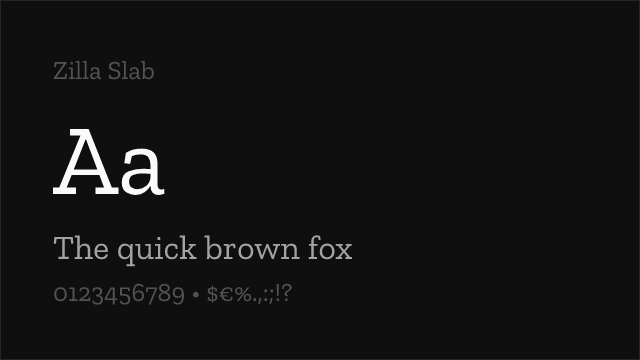
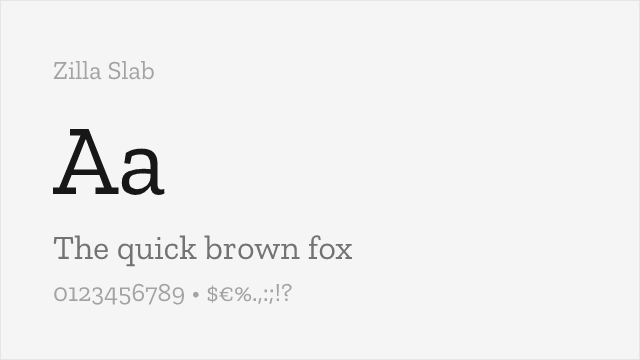
Mozilla's slab serif with contemporary refinement and strong branding presence
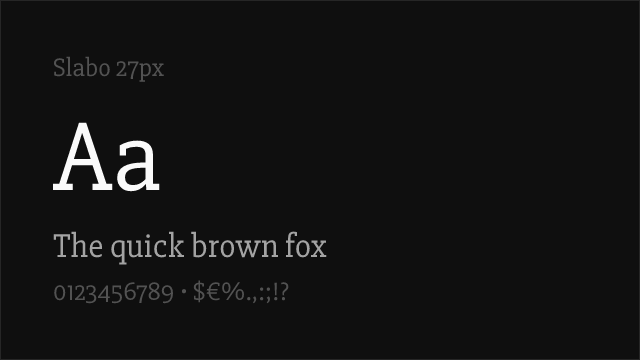
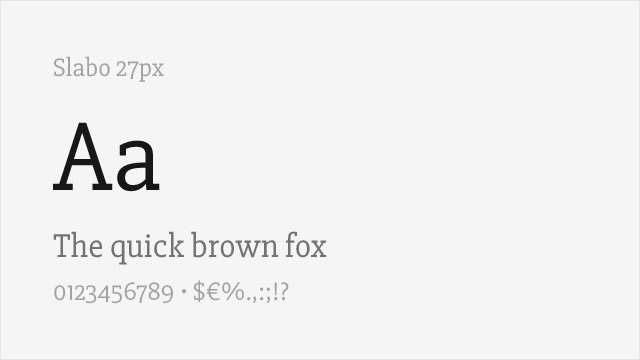
Web-optimized slab with bracketed serifs for excellent screen readability
Replacement Summary
Source: FontAlternatives.com
Premium font: Clarendon
Best free alternative: Zilla Slab
FontAlternatives similarity score: 82%
Replacement difficulty: Medium
Best for: tech branding, web headlines, digital products, open source projects
Notable users: Sony, Wells Fargo, Ruby Tuesday
Not recommended when: Brand consistency with Sony requires exact letterforms
What is the best free alternative to Clarendon?
Zilla Slab is the best free alternative to Clarendon with a FontAlternatives similarity score of 82%.
Zilla Slab shares similar proportions, stroke characteristics, and intended use with Clarendon. It is available under the OFL-1.1 license, which permits both personal and commercial use at no cost.
This alternative works particularly well for: tech branding, web headlines, digital products, open source projects.
Can I safely replace Clarendon with Zilla Slab?
Yes, with some considerations. Zilla Slab achieves a FontAlternatives similarity score of 82%, indicating good structural compatibility for most use cases.
Licensing: Zilla Slab is licensed under OFL-1.1, which allows commercial use without licensing fees or royalties.
Weight coverage: All 4 weights have exact matches available.
When should I NOT replace Clarendon?
While Zilla Slab is a strong alternative, there are situations where replacing Clarendon may not be appropriate:
- Optical precision requirements: Zilla Slab has measurable structural differences from Clarendon that may be visible in precise design work.
- Extended language support: Zilla Slab has limited cyrillic support compared to Clarendon.
- Brand consistency: Clarendon is commonly seen in Sony logo (historical) contexts where exact letterforms may be required.
- Strict compliance: Verify that OFL-1.1 terms meet your specific legal and compliance requirements.
Weight-Matching Guide
Map Clarendon weights to their closest free alternatives for accurate font substitution.
Zilla Slab
| Clarendon | Zilla Slab | Match |
|---|---|---|
| Light | Light (300) | exact |
| Regular | Regular (400) | exact |
| Medium | Medium (500) | exact |
| Bold | Bold (700) | exact |
Performance Guide
Production performance metrics for each alternative.
How to Use Zilla Slab
Copy these code snippets to quickly add Zilla Slab to your project.
CSS code for Zilla Slab
@import url('https://fonts.googleapis.com/css2?family=Zilla+Slab:wght@300;400;500;600;700&display=swap');HTML code for Zilla Slab
<link rel="preconnect" href="https://fonts.googleapis.com">
<link rel="preconnect" href="https://fonts.gstatic.com" crossorigin>
<link href="https://fonts.googleapis.com/css2?family=Zilla+Slab:wght@300;400;500;600;700&display=swap" rel="stylesheet">
Tailwind code for Zilla Slab
// tailwind.config.js
module.exports = {
  theme: {
    extend: {
      fontFamily: {
        'zilla-slab': ['"Zilla Slab"', 'sans-serif'],
      },
    },
  },
}

// Usage in HTML:
// <p class="font-zilla-slab">Your text here</p>
Next.js code for Zilla Slab
// Using next/font (Next.js 13+)
import { Zilla_Slab } from 'next/font/google';

const zilla_slab = Zilla_Slab({
  subsets: ['latin'],
  weight: ['300', '400', '500', '600', '700'],
});

export default function Component() {
  return (
    <p className={zilla_slab.className}>
      Your text here
    </p>
  );
}

// Or using inline styles with Google Fonts link:
// <p style={{ fontFamily: '"Zilla Slab"' }}>Your text</p>
Expo and React Native code for Zilla Slab
// Install: npx expo install @expo-google-fonts/zilla-slab expo-font
import { useFonts, Zilla_Slab_400Regular } from '@expo-google-fonts/zilla-slab';

export default function App() {
  const [fontsLoaded] = useFonts({
    Zilla_Slab_400Regular,
  });

  if (!fontsLoaded) return null;

  return (
    <Text style={{ fontFamily: 'Zilla_Slab_400Regular' }}>
      Your text here
    </Text>
  );
}
Recommended Font Pairings
These free fonts pair well with Zilla Slab Clarendon for headlines, body text, or accent use.
Open Sans's neutral sans-serif forms provide clean body text that lets Clarendon's bold slab serif headlines command attention
Source Sans Pro's professional clarity pairs naturally with Clarendon's authoritative slab serifs for corporate and editorial design
Lato's humanist warmth complements Clarendon's sturdy bracketed serifs, creating balanced layouts with approachable body text
Frequently Asked Questions
What is the best free alternative to Clarendon?
Zilla Slab is the best free alternative to Clarendon with a FontAlternatives similarity score of 82%. It shares similar proportions and characteristics while being available under the OFL-1.1 license for both personal and commercial use at no cost.
Is there a free version of Clarendon?
There is no official free version of Clarendon. However, Zilla Slab is available under the OFL-1.1 open-source license and achieves a FontAlternatives similarity score of 82%. It includes 5 weights and supports latin, latin-extended.
What Google Font looks like Clarendon?
The Google Fonts most similar to Clarendon are Zilla Slab, Slabo 27px. Among these alternatives, Zilla Slab offers the closest match with a FontAlternatives similarity score of 82% and includes 5 weights for design flexibility.
Can I use Zilla Slab commercially?
Yes, Zilla Slab can be used commercially. It is licensed under OFL-1.1, which allows free use in websites, applications, print materials, and commercial projects without purchasing a license or paying royalties.
Is Zilla Slab similar enough to Clarendon?
Zilla Slab achieves a FontAlternatives similarity score of 82% compared to Clarendon. While not identical, it offers comparable letterforms, proportions, and visual style. Most designers find it works excellently as a substitute in web and print projects.
What are the main differences between Clarendon and its free alternatives?
Free alternatives to Clarendon may differ in subtle details like letter spacing, curve refinements, and available weights. Premium fonts typically include more OpenType features, extended language support, and optimized screen rendering. However, for most projects, these differences are negligible.
Where can I download free alternatives to Clarendon?
Download Zilla Slab directly from Google Fonts. Click the "Get Font" button on any alternative listed above to visit the official download page. Google Fonts also provides convenient embed codes for seamless web integration.