Free Alternatives to Neue Haas Grotesk

About Neue Haas Grotesk
- Foundry
- Linotype
- Classification
- sans-serif
- Style
- neo-grotesque
Brands Using Neue Haas Grotesk
Brand identity and wayfinding typography
Logo and brand communications (as Helvetica)
Historical brand typography and communications (as Helvetica)
Corporate brand identity and product labeling (as Helvetica)
Station signage and wayfinding system (as Helvetica)
 See Neue Haas Grotesk live on these sites with FontSwap →
Neue Haas Grotesk is the typeface that became Helvetica. Designed by Max Miedinger with Eduard Hoffmann at the Haas Type Foundry in Munchenstein, Switzerland in 1957, it was originally named Neue Haas Grotesk — literally "New Haas Grotesque" — before being renamed Helvetica (from the Latin "Helvetia," meaning Switzerland) in 1960 when D. Stempel AG licensed it for hot-metal and Linotype machine distribution. In 2010, Christian Schwartz undertook a meticulous digital restoration for Linotype, returning to Miedinger and Hoffmann's original drawings to produce the typeface as it was intended before decades of adaptation, licensing, and mechanical reproduction altered its character.
Neue Haas Grotesk requires a paid license from Linotype (Monotype). Desktop, web, and app licenses are priced per style through Linotype's licensing model. If your budget cannot accommodate Linotype's licensing structure, this page covers the best open-source alternatives and what to evaluate when choosing one.
Why Neue Haas Grotesk Matters
Neue Haas Grotesk matters because understanding it means understanding the most influential typeface of the 20th century — not as the ubiquitous, somewhat degraded Helvetica that appears on tax forms and subway signage, but as the original design intent that made the typeface revolutionary in the first place.
When Miedinger and Hoffmann created Neue Haas Grotesk in 1957, they were responding to the dominance of Akzidenz-Grotesk, the late 19th-century grotesque that had become the workhorse of Swiss Modern typography. Their goal was not radical innovation but careful refinement — a grotesque that corrected Akzidenz-Grotesk's inconsistencies while maintaining its functional neutrality. The result was more even in its weight distribution, more consistent in its proportions, and more controlled in its spacing than anything previously available.
The design's commercial success after its 1960 renaming to Helvetica is well-documented. American Airlines, BMW, Panasonic, The North Face, Jeep, and hundreds of other global brands adopted it. The New York City Subway system used it for wayfinding. Governments, universities, and corporations made it their default. Helvetica became so pervasive that it stopped being a design choice and became the absence of one — which is precisely why Christian Schwartz's 2010 digital restoration matters.
Schwartz's Neue Haas Grotesk Display and Text families return to Miedinger's original drawings, correcting the distortions accumulated through decades of phototype and early digital adaptation. The differences from standard Helvetica are subtle but significant: the spacing is tighter and more considered, the curves are more refined, certain characters like the capital R have different leg structures, and the overall texture in paragraphs is denser and more authoritative. Where Helvetica now reads as generic, Neue Haas Grotesk reads as intentional.
This distinction has made Neue Haas Grotesk the preferred choice for designers who want the structural virtues of Helvetica without its cultural baggage. Fashion brands, architecture firms, and cultural institutions choose Neue Haas Grotesk because it communicates the same Swiss rationalism while signaling typographic awareness that generic Helvetica cannot.
Design Characteristics
Neue Haas Grotesk's design reveals the careful refinement that made it the foundation of modern grotesque typography:
- Moderate x-height with classical proportions: The x-height is generous but not exaggerated, maintaining the balanced proportion between uppercase and lowercase that gives Neue Haas Grotesk its authoritative, composed reading rhythm — distinct from the inflated x-heights of screen-first fonts
- Tightly controlled apertures: The
c,e, andshave relatively closed openings — more restricted than contemporary screen-optimized fonts but more open than the original Akzidenz-Grotesk. This tightness creates the dense, even typographic texture that is Neue Haas Grotesk's signature - Low stroke contrast with grotesque warmth: Strokes are nearly monolinear but carry subtle thickness variation, particularly at junctions and curves. This is not the mechanical uniformity of a geometric sans but the controlled organic quality of a true grotesque
- Flat-sided bowls with Swiss precision: The
o,b,d, andpfeature the characteristic flattened sides of the Swiss grotesque tradition — neither circular like Futura nor fully squared like DIN. This produces compact, efficient letterforms that pack densely in text settings - Horizontal terminals with slight curvature: Stroke endings are cut horizontally with subtle refinements at the tips — a detail visible in the
c,s, andethat distinguishes the original Neue Haas Grotesk from later Helvetica digitizations - The distinctive
Rwith curved leg: The uppercaseRin Neue Haas Grotesk has a curved, extended leg that differs from most Helvetica versions — one of the clearest visual markers of Schwartz's restoration - Display and Text optical sizes: Schwartz created distinct Display and Text variants with appropriate spacing, contrast, and detail adjustment — restoring the optical sizing principle that was lost when Helvetica was adapted to single-master digital formats
Where Neue Haas Grotesk Excels
Neue Haas Grotesk is at its best in contexts that reward Swiss precision and typographic heritage:
- Luxury and fashion branding: The tighter spacing and more refined curves distinguish it from commodity Helvetica, signaling typographic sophistication in fashion and luxury contexts where default Helvetica would read as lazy
- Print editorial and publishing: The optical Text variant handles body copy at 9-12pt with authority, and the Display variant provides elegant headlines — the kind of print performance that screen-first fonts cannot match
- Corporate identity systems with historical weight: For institutions that want the structural clarity of Helvetica but need to signal design awareness, Neue Haas Grotesk is the precise answer
- Museum and gallery exhibitions: Cultural institutions use it for exhibition materials where neutral typography must coexist with visual art — the typeface's self-effacing quality serves this purpose perfectly
- Advertising at large scales: The Display variant's refined details become visible and impressive at billboard and poster sizes, where most grotesques lose character
- Archival and heritage projects: For brands or institutions with mid-century roots, Neue Haas Grotesk connects to the typographic heritage of the Swiss International Style
Where Neue Haas Grotesk Struggles
Neue Haas Grotesk has clear limitations in contemporary contexts:
- Screen rendering at small sizes: The tight apertures and phototype-era proportions that make Neue Haas Grotesk elegant in print can reduce legibility at 12-14px on standard-resolution screens. Fonts like Inter and Roboto were specifically engineered to solve this problem
- Warm or approachable brands: The Swiss restraint reads as cold, corporate, and inaccessible for brands targeting casual, family, or wellness audiences. Neue Haas Grotesk communicates authority and precision, not warmth
- Variable font workflows: Neue Haas Grotesk ships as static files only. Web performance-conscious teams using variable font strategies must look elsewhere
- Broad script requirements: Coverage is limited to Latin and Latin Extended. Projects requiring Cyrillic, Greek, Arabic, Hebrew, or CJK scripts need fallback typefaces
- Contexts where Helvetica baggage applies: Despite being the "original" Helvetica, Neue Haas Grotesk is close enough that casual observers may perceive it as just another Helvetica — losing the distinctiveness advantage in contexts where the audience does not appreciate the typographic difference
- Tight budgets: Licensing the full family from Linotype is expensive, and the per-style pricing adds up quickly when Display, Text, and multiple weights are needed
How to Choose a Free Substitute
When evaluating Neue Haas Grotesk replacements, focus on these criteria:
Typographic density and texture: Neue Haas Grotesk's defining quality is its dense, even typographic color — tighter than most contemporary sans-serifs. Set a full paragraph in both typefaces and compare the overall texture. Inter comes closest to this density among free alternatives; Roboto is slightly more open. If the paragraph texture is too airy, the replacement will read as generic rather than authoritative.
Aperture behavior: The relatively closed apertures of
c,e, andsare central to Neue Haas Grotesk's character. Your alternative will likely have more open apertures (most modern fonts do), so evaluate whether this openness changes the overall impression in your specific context. For screen-first work, open apertures may actually be an improvement.Print performance: If your project includes print, test your alternative at 9-10pt in continuous text. Neue Haas Grotesk was born in print and excels there. Many free fonts optimized for screen lose definition at these sizes. Source Sans 3 and Libre Franklin have the strongest print performance among the alternatives.
Weight range and naming: Neue Haas Grotesk's weight range is comprehensive but uses traditional naming (Thin, Light, Roman, Medium, Bold, Black). Verify that your alternative's weight steps align — particularly the Regular/Roman weight, which sets the baseline for all hierarchical relationships.
Cultural signal: The critical question is whether your context requires the specific cultural authority that Neue Haas Grotesk carries as the "true Helvetica." If your audience includes typographers or design-literate viewers, the replacement font's heritage matters. Inter signals "modern design intelligence." Roboto signals "Google ecosystem." Neither signals "Swiss typographic tradition" the way Neue Haas Grotesk does.
Premium Font Neighbors
If Neue Haas Grotesk's approach resonates but you want to explore adjacent options:
Cluster A: Swiss grotesque heritage (Neue Haas Grotesk's direct relatives)
- Helvetica (Linotype/Monotype) — the renamed, adapted version of the same original design; more widely distributed but less faithful to Miedinger's drawings
- Neue Helvetica (Linotype) — the 1983 rationalized version with consistent numbering; more systematic but further from the original
- Univers (Linotype) — Adrian Frutiger's contemporary and competitor from 1957; more geometric and systematic than Neue Haas Grotesk
- Akzidenz-Grotesk (Berthold) — the 1898 grotesque that inspired Miedinger; rougher and more characterful
Cluster B: Contemporary neo-grotesques (carrying the tradition forward)
- Aktiv Grotesk (Dalton Maag) — a comprehensive modern grotesque built for digital-first corporate identity systems
- Haas Unica (Monotype) — the legendary Helvetica-Univers hybrid, revived by Toshi Omagari; shares Neue Haas Grotesk's Haas Type Foundry heritage
- Suisse Int'l (Swiss Typefaces) — Ian Party's contemporary Swiss grotesque; the same tradition refined for editorial and branding
- Graphik (Commercial Type) — Christian Schwartz's other grotesque; softer and more editorial than his Neue Haas Grotesk restoration
FAQ
Is Neue Haas Grotesk free?
No. Neue Haas Grotesk is a premium typeface from Linotype (now part of Monotype) with per-style licensing. Desktop and web licenses are priced separately. The complete family (Display and Text in all weights with italics) represents a substantial investment. There is no free or trial version.
What is the best free alternative to Neue Haas Grotesk?
Inter is the closest free alternative at 86% similarity. Both share a neo-grotesque construction, controlled proportions, and neutral character. Inter's more open apertures and screen-first optimization make it better for digital contexts, while Neue Haas Grotesk retains the edge in print. Inter's variable font support and broader language coverage provide practical advantages for web projects.
What is the difference between Neue Haas Grotesk and Helvetica?
They share the same origin — both are based on Max Miedinger's 1957 design for the Haas Type Foundry. However, Neue Haas Grotesk (the 2010 Christian Schwartz restoration) returns to the original drawings before decades of adaptation for phototype, Linotype machines, and early digital formats altered the design. The differences are subtle: Neue Haas Grotesk has tighter spacing, more refined curves, a different R leg, and distinct Display/Text optical sizes. Standard Helvetica lost many of these nuances through repeated technological adaptation.
Is Neue Haas Grotesk a variable font?
No. Neue Haas Grotesk ships as static font files in Display and Text optical sizes, each available in multiple weights with italics. There is an irony here: the original 1957 Neue Haas Grotesk was similarly constrained to fixed sizes cast in metal — some things in typography do not change even across sixty years of technological revolution. For web performance, this means separate file downloads for each weight, a disadvantage compared to variable font alternatives like Inter or Roboto that allow a single file to interpolate across the entire weight range.
Who designed Neue Haas Grotesk?
The original Neue Haas Grotesk was designed by Max Miedinger with direction from Eduard Hoffmann at the Haas Type Foundry in Munchenstein, Switzerland, in 1957. The 2010 digital restoration was undertaken by Christian Schwartz for Linotype, who returned to the original drawings and production materials to create an accurate digital version of Miedinger's design as it was intended.
Why is Neue Haas Grotesk considered better than Helvetica?
"Better" depends on context, but typographers generally prefer Neue Haas Grotesk because it represents Miedinger's original design intent. Standard Helvetica was altered through successive technological adaptations — metal to phototype to digital — each introducing compromises. Schwartz's restoration corrected these distortions, resulting in more refined spacing, more consistent curves, and optical sizing (Display vs Text) that standard Helvetica lacks. For designers, Neue Haas Grotesk is the "definitive edition."
Does Neue Haas Grotesk support Cyrillic?
No. Both Neue Haas Grotesk Display and Text are Latin and Latin Extended only, with no Cyrillic, Greek, Arabic, or CJK. For projects requiring broader script coverage, Inter (Cyrillic, Greek) or Noto Sans (900+ languages) are open-source alternatives with more extensive support.
How does Neue Haas Grotesk compare to Aktiv Grotesk?
Both are comprehensive neo-grotesque systems designed for professional use. Aktiv Grotesk (Dalton Maag) was designed specifically for the digital age with extensive language support and careful screen hinting. Neue Haas Grotesk carries the historical authority of being the original Helvetica but was not originally designed for screen rendering. Aktiv Grotesk is more practical for digital-first corporate identity systems; Neue Haas Grotesk is more prestigious for design-aware brands that value typographic heritage.
When should I use Neue Haas Grotesk instead of a free alternative?
Use Neue Haas Grotesk when the typographic heritage matters to your audience — luxury branding, fashion, architecture, cultural institutions, and contexts where the design community is part of the audience. The specific cultural signal of choosing the "original Helvetica restored by Christian Schwartz" communicates design literacy in a way that Inter or Roboto, however well-designed, cannot. For purely functional digital product work, the free alternatives are often technically superior.
What happened to the name Helvetica?
When D. Stempel AG licensed Neue Haas Grotesk for production on Linotype machines in 1960, they renamed it Helvetica because "Neue Haas Grotesk" was considered too provincial for international marketing. The name stuck, and Helvetica became the most widely used typeface in history. The 2010 Schwartz restoration for Linotype restored the original name, though both names now coexist — Helvetica for the adapted versions, Neue Haas Grotesk for the faithful restoration.
Is Neue Haas Grotesk on Google Fonts?
No, Neue Haas Grotesk is a premium font from Linotype and is not available on Google Fonts.
The closest Google Fonts alternative is Inter with 86% similarity. Get it free on Google Fonts ↗
Free Alternatives (8)
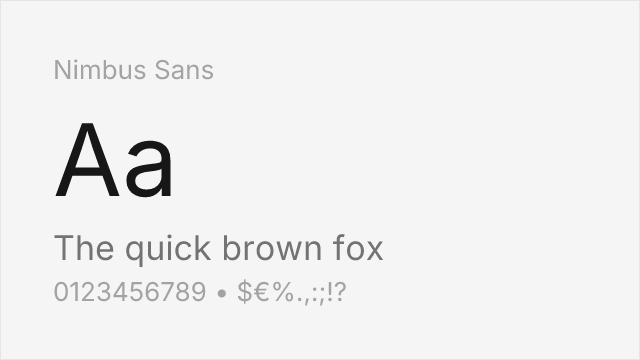
URW's metric-compatible Helvetica clone with identical character widths
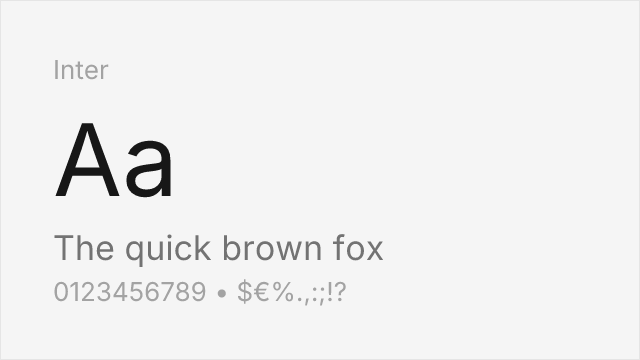
Closest modern match with screen-first optimization and comprehensive variable font support
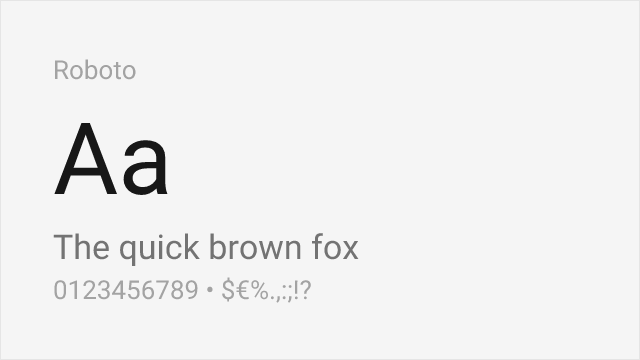
Google's system font with comparable neutral character and enterprise-grade screen optimization
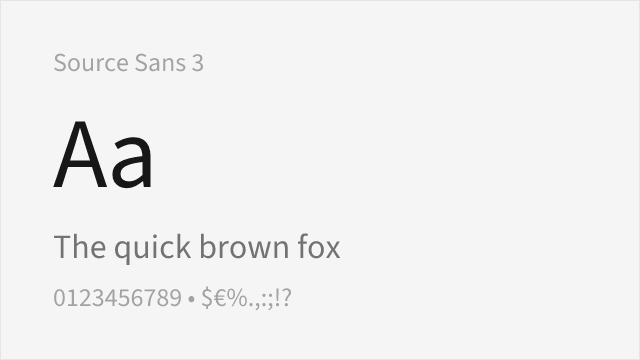
Adobe's workhorse sans with strong hinting and proven enterprise reliability
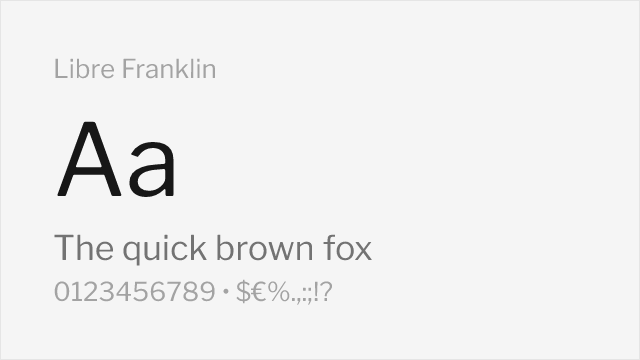
American gothic with editorial utility that parallels Neue Haas Grotesk's corporate workhorse role
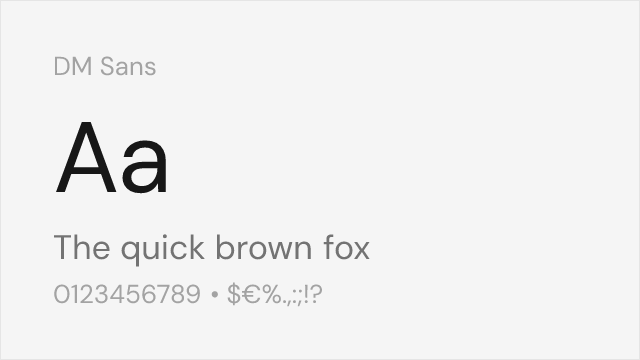
Geometric-grotesque blend with clean proportions and modern sensibility
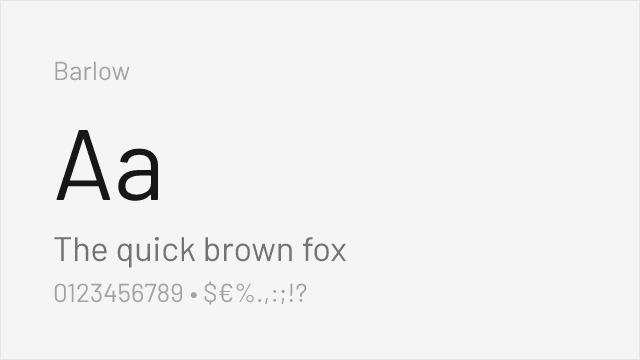
Utilitarian grotesque with slightly condensed proportions and California-influenced design
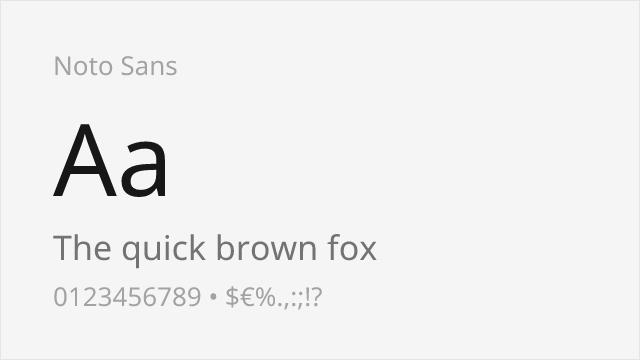
Google's universal sans with unmatched language coverage and consistent cross-platform rendering
Compare the alternatives
See how Neue Haas Grotesk compares to its top alternatives — and how those alternatives compare to each other — side by side.
See where Neue Haas Grotesk is used in the wild and swap to free alternatives live.
Install FontSwap →Replacement Summary
Source: FontAlternatives.com
Premium font: Neue Haas Grotesk
Best free alternative: Nimbus Sans
FontAlternatives similarity score: 88%
Replacement difficulty: Low
Best for: print production, PDF generation, legacy system migration
Notable users: American Airlines, The North Face, BMW
Not recommended when: Brand consistency with American Airlines requires exact letterforms
What is the best free alternative to Neue Haas Grotesk?
Nimbus Sans is the best free alternative to Neue Haas Grotesk with a FontAlternatives similarity score of 88%.
Nimbus Sans shares similar proportions, stroke characteristics, and intended use with Neue Haas Grotesk. It is available under the GPL-2.0-with-font-exception license, which permits both personal and commercial use at no cost.
This alternative works particularly well for: print production, PDF generation, legacy system migration.
Can I safely replace Neue Haas Grotesk with Nimbus Sans?
Yes, Nimbus Sans is a high-confidence replacement for Neue Haas Grotesk. The FontAlternatives similarity score of 88% indicates strong structural compatibility.
Licensing: Nimbus Sans is licensed under GPL-2.0-with-font-exception, which allows commercial use without licensing fees or royalties.
Weight coverage: All 2 weights have exact matches available.
When should I NOT replace Neue Haas Grotesk?
While Nimbus Sans is a strong alternative, there are situations where replacing Neue Haas Grotesk may not be appropriate:
- Strict compliance: Verify that GPL-2.0-with-font-exception terms meet your specific legal and compliance requirements.
Weight-Matching Guide
Map Neue Haas Grotesk weights to their closest free alternatives for accurate font substitution.
Nimbus Sans
| Neue Haas Grotesk | Nimbus Sans | Match |
|---|---|---|
| Regular (400) | Regular (400) | exact |
| Bold (700) | Bold (700) | exact |
Inter
| Neue Haas Grotesk | Inter | Match |
|---|---|---|
| Thin (100) | Thin (100) | close |
| Regular (400) | Regular (400) | exact |
| Medium (500) | Medium (500) | exact |
| Bold (700) | Bold (700) | close |
Roboto
| Neue Haas Grotesk | Roboto | Match |
|---|---|---|
| Thin (100) | Thin (100) | close |
| Regular (400) | Regular (400) | exact |
| Medium (500) | Medium (500) | exact |
| Bold (700) | Bold (700) | exact |
Source Sans 3
| Neue Haas Grotesk | Source Sans 3 | Match |
|---|---|---|
| Light (300) | Light (300) | close |
| Regular (400) | Regular (400) | close |
| Medium (500) | Medium (500) | substitute |
| Bold (700) | Bold (700) | close |
Libre Franklin
| Neue Haas Grotesk | Libre Franklin | Match |
|---|---|---|
| Light (300) | Light (300) | close |
| Regular (400) | Regular (400) | close |
| Medium (500) | Medium (500) | substitute |
| Bold (700) | Bold (700) | close |
DM Sans
| Neue Haas Grotesk | DM Sans | Match |
|---|---|---|
| Light (300) | Light (300) | close |
| Regular (400) | Regular (400) | close |
| Medium (500) | Medium (500) | close |
| Bold (700) | Bold (700) | close |
Barlow
| Neue Haas Grotesk | Barlow | Match |
|---|---|---|
| Thin (100) | Thin (100) | close |
| Regular (400) | Regular (400) | close |
| Medium (500) | Medium (500) | close |
| Bold (700) | Bold (700) | close |
Noto Sans
| Neue Haas Grotesk | Noto Sans | Match |
|---|---|---|
| Thin (100) | Thin (100) | close |
| Regular (400) | Regular (400) | close |
| Medium (500) | Medium (500) | close |
| Bold (700) | Bold (700) | close |
Performance Guide
Production performance metrics for each alternative.
How to Use Nimbus Sans
Copy these code snippets to quickly add Nimbus Sans to your project.
CSS code for Nimbus Sans
/* Download from: https://www.fontsquirrel.com/fonts/nimbus-sans-l */
@font-face {
  font-family: "Nimbus Sans";
  src: url('/fonts/nimbus-sans.woff2') format('woff2');
  font-display: swap;
}
HTML code for Nimbus Sans
<!-- Download from: https://www.fontsquirrel.com/fonts/nimbus-sans-l -->
<link href="/fonts/nimbus-sans.css" rel="stylesheet">
Tailwind code for Nimbus Sans
// tailwind.config.js
module.exports = {
  theme: {
    extend: {
      fontFamily: {
        'nimbus-sans': ['"Nimbus Sans"', 'sans-serif'],
      },
    },
  },
}

// Usage in HTML:
// <p class="font-nimbus-sans">Your text here</p>
Next.js code for Nimbus Sans
// Import the font CSS in your _app.js or layout
import '/fonts/nimbus-sans.css';

export default function Component() {
  return (
    <p style={{ fontFamily: '"Nimbus Sans"' }}>
      Your text here
    </p>
  );
}
Expo and React Native code for Nimbus Sans
// Install: npx expo install expo-font
import { useFonts } from 'expo-font';

export default function App() {
  const [fontsLoaded] = useFonts({
    'Nimbus Sans': require('./assets/fonts/nimbus-sans.ttf'),
  });

  if (!fontsLoaded) return null;

  return (
    <Text style={{ fontFamily: 'Nimbus Sans' }}>
      Your text here
    </Text>
  );
}

// Download font from: https://www.fontsquirrel.com/fonts/nimbus-sans-l
Recommended Font Pairings
These free fonts pair well with Nimbus Sans Neue Haas Grotesk for headlines, body text, or accent use.
EB Garamond's classical old-style serifs create timeless contrast against Neue Haas Grotesk's Swiss rationalism. This is one of typography's most proven pairings — the humanist warmth of Garamond balanced by the mechanical precision of a grotesque — suitable for everything from corporate reports to museum catalogues.
Merriweather's sturdy, screen-optimized serifs provide warm reading contrast to Neue Haas Grotesk's clean sans-serif forms. Both are optimized for screen rendering, making them a practical pair for content-heavy websites and editorial platforms.
Vollkorn's robust German Antiqua serifs echo Neue Haas Grotesk's Central European design heritage. Both share a pragmatic, workmanlike quality that pairs naturally for scholarly, institutional, and publishing contexts.
Browse Alternatives by Context
Find Neue Haas Grotesk alternatives filtered by specific use case, style, or language support.
By Script
Frequently Asked Questions
What is the best free alternative to Neue Haas Grotesk?
Nimbus Sans is the best free alternative to Neue Haas Grotesk with a FontAlternatives similarity score of 88%. It shares similar proportions and characteristics while being available under the GPL-2.0-with-font-exception license for both personal and commercial use at no cost.
Is there a free version of Neue Haas Grotesk?
There is no official free version of Neue Haas Grotesk. However, Nimbus Sans is available under the GPL-2.0-with-font-exception open-source license and achieves a FontAlternatives similarity score of 88%. It includes 2 weights and supports latin, latin-extended.
What Google Font looks like Neue Haas Grotesk?
The Google Fonts most similar to Neue Haas Grotesk are Inter, Roboto, Source Sans 3. Among these alternatives, Inter offers the closest match with a FontAlternatives similarity score of 86% and includes variable weights for flexible typography options.
Can I use Nimbus Sans commercially?
Yes, Nimbus Sans can be used commercially. It is licensed under GPL-2.0-with-font-exception, which allows free use in websites, applications, print materials, and commercial projects without purchasing a license or paying royalties.
Is Nimbus Sans similar enough to Neue Haas Grotesk?
Nimbus Sans achieves a FontAlternatives similarity score of 88% compared to Neue Haas Grotesk. While not identical, it offers comparable letterforms, proportions, and visual style. Most designers find it works excellently as a substitute in web and print projects.
What are the main differences between Neue Haas Grotesk and its free alternatives?
Free alternatives to Neue Haas Grotesk may differ in subtle details like letter spacing, curve refinements, and available weights. Premium fonts typically include more OpenType features, extended language support, and optimized screen rendering. However, for most projects, these differences are negligible.
Where can I download free alternatives to Neue Haas Grotesk?
Download Nimbus Sans directly from fontsquirrel. Click the "Get Font" button on any alternative listed above to visit the official download page. Google Fonts also provides convenient embed codes for seamless web integration.