Free Alternatives to Replica

About Replica
- Foundry
- Lineto
- Classification
- sans-serif
- Style
- geometric
Brands Using Replica
The film magazine's editorial typography
The design studio's identity and project work
A designer's-choice grotesque for cultural-sector identity work
Popular in art-school and studio branding
 See Replica live on these sites with FontSwap →
Replica is a grid-based geometric sans-serif designed by Norm (the studio of Dimitri Bruni and Manuel Krebs) and released by Lineto in 2008. It is one of the most conceptually rigorous typefaces produced in the twenty-first century — every letterform is constructed on a strict geometric grid, giving the typeface a mechanical precision that reads as simultaneously clinical and strangely beautiful. Replica has become a defining typeface for architecture firms, contemporary art museums, Swiss design studios, and academic design programs worldwide.
Replica requires a paid license from Lineto. Lineto's licensing model is per-format (desktop, web, app) with pricing based on usage scope, sold directly through Lineto rather than through Google Fonts or Adobe Fonts. Lineto does offer downloadable trial fonts so you can test Replica before buying, but production use still requires a paid license. If your project cannot accommodate Lineto's licensing, this page covers the best open-source alternatives and the trade-offs involved in replacing a typeface as distinctive as Replica.
Why Replica Matters
Replica occupies a unique position in contemporary typography. It is not a revival, not a refinement, and not an evolution of existing forms — it is an argument. Norm designed it as a deliberate provocation: what happens when you strip a typeface down to pure geometric construction, building every letter on the same modular grid with no optical corrections? The result is a font that violates many conventional rules of type design — curves that feel slightly too flat, terminals that end abruptly, proportions that prioritize systematic consistency over individual letter beauty.
This deliberate strangeness is precisely why architects and cultural institutions gravitate toward Replica. Architecture and design studios reach for it because it shares architecture's concern with grids, systems, and rational construction. Contemporary art museums and galleries adopt it because it signals contemporary sophistication without the populist friendliness of geometric faces like Circular or GT Walsheim. Art-and-design schools favor it because it represents a specific intellectual tradition in Swiss graphic design — the tradition that values concept and system over surface beauty.
Replica's influence extends beyond its direct use. It helped establish the aesthetic vocabulary of what might be called "intellectual minimalism" — typography that signals design literacy, critical thinking, and cultural awareness. When you see Replica on a gallery invitation, architecture monograph, or academic design journal, it communicates membership in a specific creative community.
Understanding Replica means understanding where it came from. Norm, the Zurich studio of Dimitri Bruni and Manuel Krebs, built its reputation on treating graphic design as a rule-based system rather than a series of intuitive decisions. The studio is known for books and identity work that expose their own underlying logic, where grids, measurements, and construction rules are not hidden scaffolding but the visible subject of the work. Replica is that philosophy compressed into a typeface. Lineto, the designer-run Swiss foundry that distributes it, has long specialized in exactly this kind of conceptually loaded type, which is why Replica sits so naturally alongside the rest of its catalog.
The family is deliberately restrained: Lineto ships it in a compact range of Light, Regular, Bold, and Heavy, each with a matching italic. This restraint is itself a design statement. Where most contemporary font families compete on sprawling weight ranges and feature depth, Norm kept Replica to a tight set of essentials, arguing that a typeface's character should come from its construction, not from the sheer number of available weights.
Design Characteristics
Replica's design is defined by its uncompromising grid construction and the consequences that follow from it:
- Strict modular grid: Every letterform is built on the same underlying grid, with curves, diagonals, and straight strokes all conforming to the same spatial logic — this produces the typeface's characteristic mechanical consistency
- Uncorrected geometry: Unlike most typefaces, Replica deliberately avoids optical corrections. Horizontal strokes are not thinned, round letters are not enlarged, and pointed apexes are not extended — the grid dictates, and the eye adapts
- Flat-sided curves: Bowls and counters in letters like
b,d,o,p, andqhave noticeably flattened sides, a direct consequence of the grid construction that gives Replica its distinctive rectangular-circular hybrid shapes - Abrupt terminals: Strokes end cleanly and without gesture — no rounded endings, no tapered finishes, no ink traps. The effect is clinical and deliberate, as if each letter was cut rather than drawn
- Low stroke contrast: Minimal variation between horizontal and vertical stroke weights creates even typographic color, reinforcing the systematic rather than calligraphic origins of the design
- Compact proportions: Replica is moderately narrow with a moderate x-height, producing economical text blocks that work well for the dense typographic layouts common in architectural and cultural publishing
- Distinctive numerals: The figures follow the same grid logic as the letters, with a characteristically rigid
1, squared0, and angular2and3that announce the typeface's constructed nature even in data contexts
What ties these traits together is the grid itself. Replica was drawn on a comparatively coarse unit grid, so its curves are approximated from a small number of straight and angled segments rather than smooth, freely-drawn splines. At large display sizes this produces the typeface's most talked-about quirk: tiny cuts and notches where strokes meet, small flat facets on the curves, and junctions that look trimmed rather than blended. A neutral grotesque hides its construction so the reader never thinks about it. Replica does the opposite, letting the grid surface as visible texture. That is the difference between a typeface engineered to disappear and one engineered to be noticed as a system, and it is the single most important thing to understand before trying to replace it.
Where Replica Excels
Replica performs best in contexts where its conceptual rigor is an asset:
- Architecture and built environment: Replica's grid construction mirrors architectural thinking about systems, proportion, and structure — it feels native to architectural publications, project documentation, and firm identities
- Contemporary art institutions: Museums, galleries, and biennials use Replica to signal intellectual seriousness and design awareness without falling back on historical typefaces
- Design education: Art-and-design schools and Swiss design programs use Replica because it embodies the Swiss graphic design tradition while being unmistakably contemporary
- Cultural publishing: Exhibition catalogues, artist monographs, critical texts, and design journals all benefit from Replica's ability to feel rigorous and current simultaneously
- Identity systems for design studios: Replica communicates "we care about design at a conceptual level" — a specific message that resonates with clients in architecture, art, and cultural sectors
Where Replica Struggles
Replica's conceptual purity creates significant practical limitations:
- Commercial branding: Most businesses need typography that feels warm, trustworthy, or approachable — Replica's austerity can read as cold, elitist, or alienating in commercial contexts
- Long-form body text: The uncorrected geometry and low contrast cause reading fatigue in extended prose. Replica works for captions, credits, and short paragraphs, but full articles or books demand a more reading-optimized face
- Limited weight range: A compact set of Light, Regular, Bold, and Heavy (each with an italic) provides only coarse hierarchy control. Complex editorial or UI systems that require intermediate steps like Medium and SemiBold, or multiple display weights, will find Replica's range insufficient
- Screen rendering at small sizes: The deliberate absence of optical corrections means Replica can look awkward at body text sizes on screen, particularly on low-resolution displays where the subtle grid construction is lost
- Mass-market applications: Any context where the audience includes non-designers — consumer apps, e-commerce, healthcare portals — will find Replica's austerity counterproductive
Two of these limits deserve emphasis, because they are the ones most likely to derail a project. The first is that Replica's quirks work against you precisely when you need neutrality. If a brand wants type that recedes, such as a bank, a healthcare provider, or a mass-market app, the visible grid keeps pulling attention back to the letterforms instead of the message. The same distinctiveness that designers prize becomes a liability the moment the brief calls for typography that stays out of the way. The second limit is cost. Lineto's per-format, usage-scoped licensing adds up quickly once a project needs desktop, web, and app rights across a team. Lineto does provide trial fonts so you can prototype with Replica, but there is no free production tier, and every shipping format has to be paid for. For a small studio or an early-stage product, that combination of licensing friction and up-front commitment is often the deciding factor that sends people to the free alternatives below.
How to Choose a Free Substitute
Replacing Replica is genuinely difficult because its value lies in conceptual distinctiveness rather than mere shape matching. When evaluating alternatives, consider:
- Grid vs. organic construction: Replica's defining quality is that every letter feels constructed rather than drawn. Test your alternative by looking at the
o,b,d, andp— do the curves feel geometrically consistent, or do they vary organically? The more systematic, the closer the match - Emotional temperature: Replica is intentionally cold. Most free alternatives are designed to be friendly or neutral, which fundamentally changes the tone. Barlow and IBM Plex Sans are the coolest-toned free options, but neither reaches Replica's austerity
- Limited weight range honesty: If you are replacing Replica with a font that has 9 weights, resist using all of them. Replica's restrained range — essentially Light, Regular, Bold, and Heavy — is part of its aesthetic, so holding yourself to a handful of weights rather than a full ramp will feel closer to the original
- Proportions and spacing: Replica is moderately compact. Alternatives that are significantly wider (like Nunito) or significantly narrower (like Barlow Condensed) will change the text block density noticeably
- Intellectual context: If you chose Replica because of what it communicates about your design values, no free alternative will fully replace that signal. Consider whether the specific typeface matters, or whether the design system and layout can carry the conceptual weight instead
In practice, the choice usually narrows to a few of the free grotesques on this page. Barlow is the default when you want the closest structural echo of Replica's rational, slightly condensed skeleton, and its wide weight range leaves room to build a full system. IBM Plex Sans is the better pick when the work is institutional or multilingual and you want that same grid-derived rigor backed by broad language support. Space Grotesk is the one to reach for when you specifically want Replica's constructed, design-aware personality to show, since it is the most overtly grid-drawn of the group, even if its details read as more futuristic than Swiss. Inter, Source Sans 3, and Public Sans move progressively away from Replica's austerity toward warmth, neutrality, and accessibility. Choose them when reliability, screen rendering, or compliance matters more than preserving Replica's cold, constructed signal. Libre Franklin sits in between, trading Swiss geometry for American editorial authority when the layout leans toward publishing.
Premium Font Neighbors
If Replica's approach resonates but you want to explore adjacent premium options:
Cluster A: Swiss conceptual grotesques (Replica's direct lineage)
- Akkurat (Lineto) — Lineto's other foundational grotesque; more conventional and readable than Replica, less conceptually charged
- Suisse (Swiss Typefaces) — a comprehensive grotesque system with the Swiss precision Replica embodies, but with optical corrections and broader utility
- Basis Grotesque (Colophon Foundry) — shares Replica's interest in systematic construction with slightly more humanist inflections
Cluster B: Contemporary constructed sans-serifs
- Favorit (Dinamo) — similarly conceptual grotesque with deliberate quirks; more playful than Replica but equally design-aware
- ABC Diatype (Dinamo) — clinical neo-grotesque with contemporary details; less grid-bound than Replica but similarly austere
- Söhne (Klim Type Foundry) — "the memory of Helvetica" shares Replica's interest in reinterpreting grotesque traditions through a contemporary lens
- Circular (Lineto) — Lineto's friendly geometric; the warm counterpart to Replica's cold rationality
FAQ
Is Replica free?
No. Replica is a premium typeface from Lineto with per-format licensing. Desktop licenses are priced per workstation, with separate web and app licenses. Lineto does offer downloadable trial fonts so you can evaluate Replica before purchasing, but production use requires a paid license. The typeface is sold only directly through Lineto's website — it is not on Google Fonts or Adobe Fonts.
What is the best free alternative to Replica?
Barlow is the closest free alternative at 82% similarity, offering similarly rational, grid-influenced construction with a comprehensive weight range. However, no free alternative fully replicates Replica's distinctive grid-based austerity. IBM Plex Sans (80% similarity) is the better choice for institutional or enterprise contexts, while Space Grotesk (78% similarity) captures more of Replica's constructed, design-aware personality.
Why is Replica so popular with architects?
Architecture and typography share fundamental concerns: both disciplines build form from systematic principles, both value the relationship between grid and expression, and both operate at the intersection of function and concept. Replica's literal grid construction mirrors how architects think about space and structure. The typeface's austerity also suits architecture's tendency toward restrained, precise communication.
Can I use Replica on the web?
Yes, with a web font license from Lineto. Web licenses are priced by monthly page views and domain count. Lineto provides WOFF and WOFF2 files for self-hosting. Replica is not available through Google Fonts, Adobe Fonts, or any font hosting service.
What is the difference between Replica and Replica Pro?
Replica is the original 2008 release in its compact core range (Light, Regular, Bold, and Heavy, with italics). Replica Pro adds extended language support, additional OpenType features, and refined spacing. For most Western European projects, the standard version is sufficient. The Pro version is recommended for projects requiring broader character sets.
Who designed Replica?
Dimitri Bruni and Manuel Krebs, working as Norm, the Swiss graphic design studio known for its conceptual approach to typography and design systems. Norm operates at the intersection of graphic design, type design, and design theory. Their work is characterized by systematic thinking and deliberate rule-based construction. Replica is distributed exclusively through Lineto, the Zürich foundry founded by Cornel Windlin and Stephan Müller in 1993; Norm designed Replica for it.
Why is Replica rated "hard" replacement difficulty?
Replica's value is conceptual as much as visual. Its grid-based construction, deliberate absence of optical corrections, and limited weight range are all design statements that free alternatives cannot replicate because they are designed with different goals — readability, versatility, and broad appeal. You can approximate Replica's proportions and tone with Barlow or IBM Plex Sans, but the specific intellectual quality that makes Replica distinctive is inherent to its construction method.
What makes Replica different from a neutral grotesque like Helvetica?
Neutrality is the whole difference. Helvetica, Akkurat, and most workhorse grotesques are engineered to recede, using optical corrections and smooth curves so the reader absorbs the words without registering the type. Replica is built on the opposite premise. Its coarse-grid construction, uncorrected geometry, and small junction notches are meant to be sensed, giving text a subtly mechanical, constructed character even at a glance. In practice, Replica is the right call when you want the typography itself to signal design intent, and the wrong call when you need it to stay invisible.
Is Replica on Google Fonts?
No, Replica is a premium font from Lineto and is not available on Google Fonts.
The closest Google Fonts alternative is Barlow with 82% similarity. Get it free on Google Fonts ↗
Free Alternatives (7)
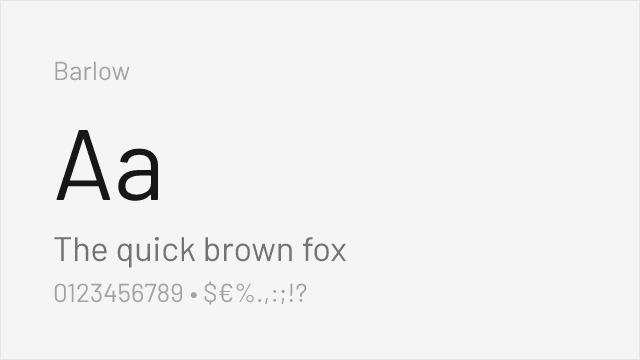
Closest structural match with similarly rational, grid-influenced construction and comprehensive weights
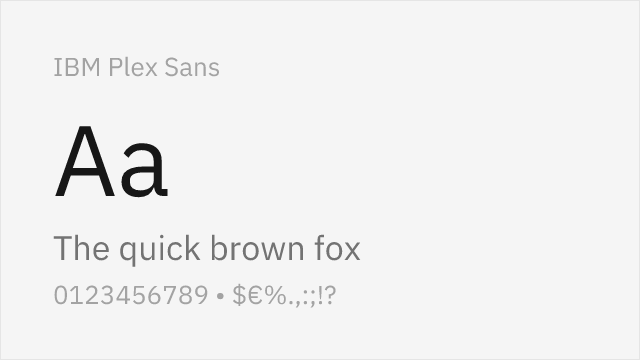
Grid-based rational design with IBM's systematic precision and excellent multi-script support
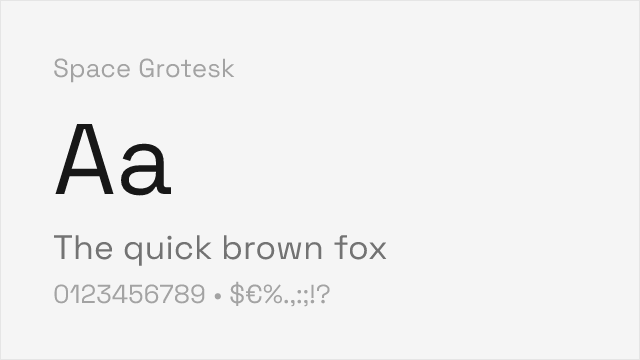
Grid-derived proportions with a distinctive technical aesthetic that echoes Replica's constructed quality
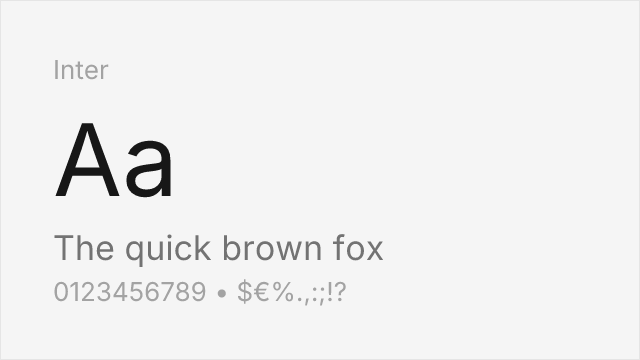
Screen-optimized precision that parallels Replica's rational approach with broader utility
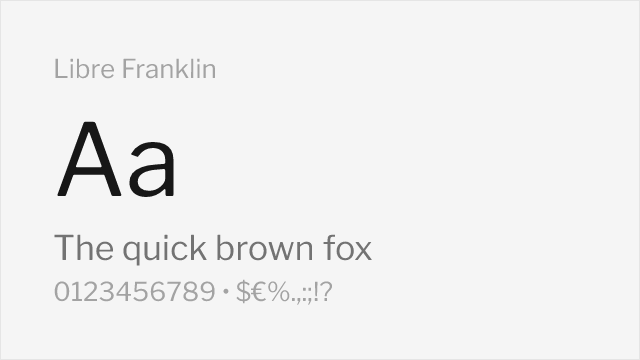
American grotesque with systematic construction and editorial authority
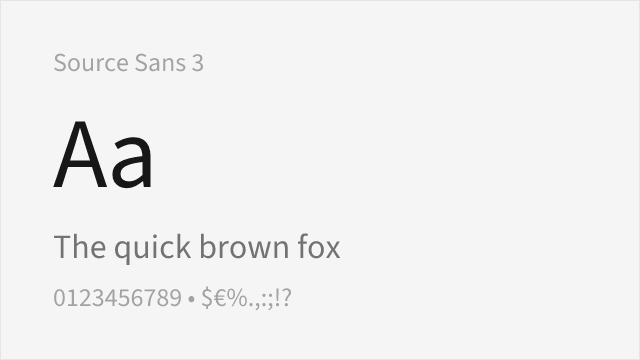
Adobe's systematic workhorse with proven institutional reliability
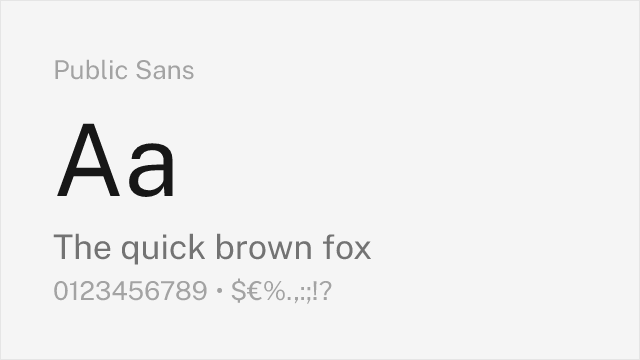
Government-grade neutrality with Replica-like institutional restraint
Compare the alternatives
See how Replica compares to its top alternatives — and how those alternatives compare to each other — side by side.
See where Replica is used in the wild and swap to free alternatives live.
Install FontSwap →Replacement Summary
Source: FontAlternatives.com
Premium font: Replica
Best free alternative: Barlow
FontAlternatives similarity score: 82%
Replacement difficulty: Medium
Best for: architecture firm branding, signage and wayfinding, data-dense layouts, industrial and infrastructure projects
Notable users: Little White Lies, XXIX, Contemporary art & architecture studios
Not recommended when: Brand consistency with Little White Lies requires exact letterforms
What is the best free alternative to Replica?
Barlow is the best free alternative to Replica with a FontAlternatives similarity score of 82%.
Barlow shares similar proportions, stroke characteristics, and intended use with Replica. It is available under the OFL-1.1 license, which permits both personal and commercial use at no cost.
This alternative works particularly well for: architecture firm branding, signage and wayfinding, data-dense layouts, industrial and infrastructure projects.
Can I safely replace Replica with Barlow?
Yes, with some considerations. Barlow achieves a FontAlternatives similarity score of 82%, indicating good structural compatibility for most use cases.
Licensing: Barlow is licensed under OFL-1.1, which allows commercial use without licensing fees or royalties.
Weight coverage: Most weights have close or exact matches available.
When should I NOT replace Replica?
While Barlow is a strong alternative, there are situations where replacing Replica may not be appropriate:
- Optical precision requirements: Barlow has measurable structural differences from Replica that may be visible in precise design work.
- Strict compliance: Verify that OFL-1.1 terms meet your specific legal and compliance requirements.
Weight-Matching Guide
Map Replica weights to their closest free alternatives for accurate font substitution.
Barlow
| Replica | Barlow | Match |
|---|---|---|
| Light (300) | Light (300) | close |
| Regular (400) | Regular (400) | close |
| Bold (700) | Bold (700) | close |
| Heavy (900) | Black (900) | close |
IBM Plex Sans
| Replica | IBM Plex Sans | Match |
|---|---|---|
| Light (300) | Light (300) | close |
| Regular (400) | Regular (400) | close |
| Bold (700) | Bold (700) | close |
| Heavy (900) | Bold (700) | substitute |
Space Grotesk
| Replica | Space Grotesk | Match |
|---|---|---|
| Light (300) | Light (300) | close |
| Regular (400) | Regular (400) | close |
| Bold (700) | Bold (700) | close |
| Heavy (900) | Bold (700) | substitute |
Inter
| Replica | Inter | Match |
|---|---|---|
| Light (300) | Light (300) | exact |
| Regular (400) | Regular (400) | exact |
| Bold (700) | Bold (700) | exact |
| Heavy (900) | Black (900) | exact |
Libre Franklin
| Replica | Libre Franklin | Match |
|---|---|---|
| Light (300) | Light (300) | close |
| Regular (400) | Regular (400) | close |
| Bold (700) | Bold (700) | close |
| Heavy (900) | Black (900) | close |
Source Sans 3
| Replica | Source Sans 3 | Match |
|---|---|---|
| Light (300) | Light (300) | close |
| Regular (400) | Regular (400) | close |
| Bold (700) | Bold (700) | close |
| Heavy (900) | Black (900) | close |
Public Sans
| Replica | Public Sans | Match |
|---|---|---|
| Light (300) | Light (300) | close |
| Regular (400) | Regular (400) | close |
| Bold (700) | Bold (700) | close |
| Heavy (900) | Black (900) | close |
Performance Guide
Production performance metrics for each alternative.
How to Use Barlow
Copy these code snippets to quickly add Barlow to your project.
CSS code for Barlow
@import url('https://fonts.googleapis.com/css2?family=Barlow:wght@100;200;300;400;500;600;700;800;900&display=swap');HTML code for Barlow
<link rel="preconnect" href="https://fonts.googleapis.com">
<link rel="preconnect" href="https://fonts.gstatic.com" crossorigin>
<link href="https://fonts.googleapis.com/css2?family=Barlow:wght@100;200;300;400;500;600;700;800;900&display=swap" rel="stylesheet">
Tailwind code for Barlow
// tailwind.config.js
module.exports = {
  theme: {
    extend: {
      fontFamily: {
        'barlow': ['Barlow', 'sans-serif'],
      },
    },
  },
}

// Usage in HTML:
// <p class="font-barlow">Your text here</p>
Next.js code for Barlow
// Using next/font (Next.js 13+)
import { Barlow } from 'next/font/google';

const barlow = Barlow({
  subsets: ['latin'],
  weight: ['100', '200', '300', '400', '500', '600', '700', '800', '900'],
});

export default function Component() {
  return (
    <p className={barlow.className}>
      Your text here
    </p>
  );
}

// Or using inline styles with Google Fonts link:
// <p style={{ fontFamily: "'Barlow'" }}>Your text</p>
Expo and React Native code for Barlow
// Install: npx expo install @expo-google-fonts/barlow expo-font
import { useFonts, Barlow_400Regular } from '@expo-google-fonts/barlow';

export default function App() {
  const [fontsLoaded] = useFonts({
    Barlow_400Regular,
  });

  if (!fontsLoaded) return null;

  return (
    <Text style={{ fontFamily: 'Barlow_400Regular' }}>
      Your text here
    </Text>
  );
}
Recommended Font Pairings
These free fonts pair well with Barlow Replica for headlines, body text, or accent use.
Merriweather's sturdy, screen-optimized serifs create strong editorial contrast against Replica's austere geometric headlines — the warmth of the serif balances the coldness of the sans, producing layouts that feel both rigorous and readable
Libre Baskerville's classical proportions and generous serifs provide the typographic warmth that Replica deliberately withholds, creating a dynamic tension between modernist construction and traditional readability in cultural and editorial publications
Cormorant Garamond's refined, high-contrast serifs complement Replica's low-contrast precision in sophisticated editorial contexts — the combination signals design literacy and cultural awareness befitting galleries, publishers, and architecture firms
Browse Alternatives by Context
Find Replica alternatives filtered by specific use case, style, or language support.
By Use Case
By Style
By Script
Frequently Asked Questions
What is the best free alternative to Replica?
Barlow is the best free alternative to Replica with a FontAlternatives similarity score of 82%. It shares similar proportions and characteristics while being available under the OFL-1.1 license for both personal and commercial use at no cost.
Is there a free version of Replica?
There is no official free version of Replica. However, Barlow is available under the OFL-1.1 open-source license and achieves a FontAlternatives similarity score of 82%. It includes 9 weights and supports latin, latin-extended.
What Google Font looks like Replica?
The Google Fonts most similar to Replica are Barlow, IBM Plex Sans, Space Grotesk. Among these alternatives, Barlow offers the closest match with a FontAlternatives similarity score of 82% and includes 9 weights for design flexibility.
Can I use Barlow commercially?
Yes, Barlow can be used commercially. It is licensed under OFL-1.1, which allows free use in websites, applications, print materials, and commercial projects without purchasing a license or paying royalties.
Is Barlow similar enough to Replica?
Barlow achieves a FontAlternatives similarity score of 82% compared to Replica. While not identical, it offers comparable letterforms, proportions, and visual style. Most designers find it works excellently as a substitute in web and print projects.
What are the main differences between Replica and its free alternatives?
Free alternatives to Replica may differ in subtle details like letter spacing, curve refinements, and available weights. Premium fonts typically include more OpenType features, extended language support, and optimized screen rendering. However, for most projects, these differences are negligible.
Where can I download free alternatives to Replica?
Download Barlow directly from Google Fonts. Click the "Get Font" button on any alternative listed above to visit the official download page. Google Fonts also provides convenient embed codes for seamless web integration.